
Stills from Fish of Empire, 2025
Fish of Empireは、ティラピアという小さな魚の秘められた歴史を追うビデオ・エッセイである。 かつてこの魚は日本の帝国による南進政策において利用され、やがてタイにおける冷戦期の開発プロジェクトの一部となった。 1965年に皇太子明仁がラーマ9世に50尾の稚魚を贈ったことで、この魚は両者の「友情の象徴」となり、後に「国王の魚」としてタイ全土へと広まっていったのである。
本作では、このティラピアの旅路が、帝国、国際援助、農業改革といったこの種が内包する複雑に絡み合う遺産を通じて、 現在はティラピアの孵化場として再利用されている元米軍基地の物語と重ねあわせながら語られる。 神話と権力が交差する地点を考察し、戦後の開発を推進する帝国的野心の力学を検証するこの作品は、 東南アジアの生態学的・政治的景観がどのように形成されてきたのかを描き出している。
The artist explores the hidden history of the tilapia, a small creature that once swam along the routes of Japan’s imperial southward expansion before becoming part of Thailand’s Cold War development projects. The tilapia was introduced into Southeast Asia through networks of colonialism and war, from East Africa to the Indonesian archipelago, Malaya, and Singapore, as a source of protein for the empire’s advance. In 1965, a gift of fifty young tilapia from Crown Prince Akihito of Japan to King Rama IX transformed the fish into a royal symbol of friendship, later spreading across the country as “the King’s fish.”
This video essay overlays the journey of the tilapia with the story of a former U.S. military base that has been repurposed as a fish hatchery, highlighting how the species carries within it the intertwined legacies of empire, international aid, and agricultural reform. The work examines the overlaps between myth and power and reveals how postwar development continued to follow the currents of imperial ambition, shaping the ecological and political landscapes of Southeast Asia.

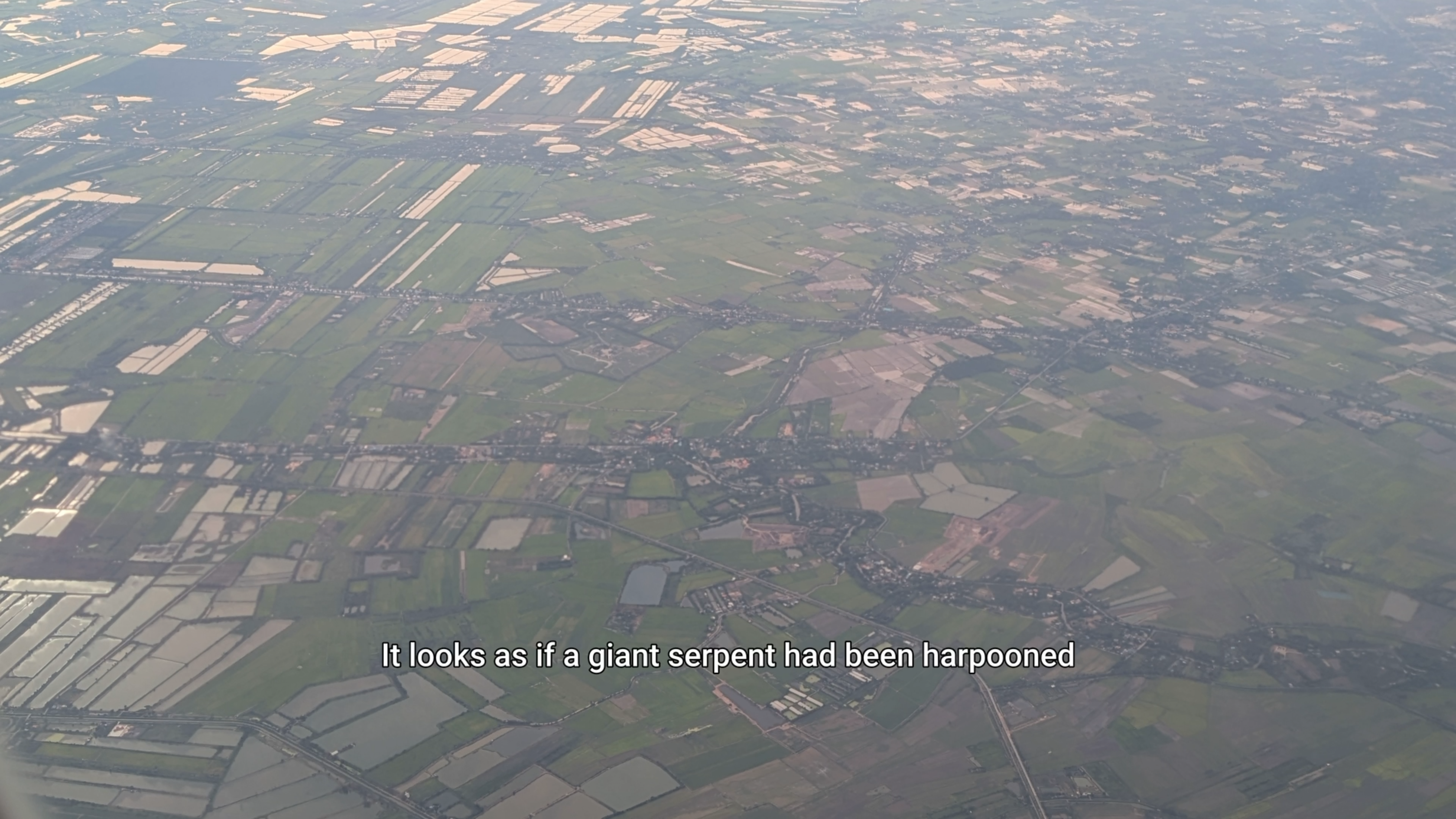
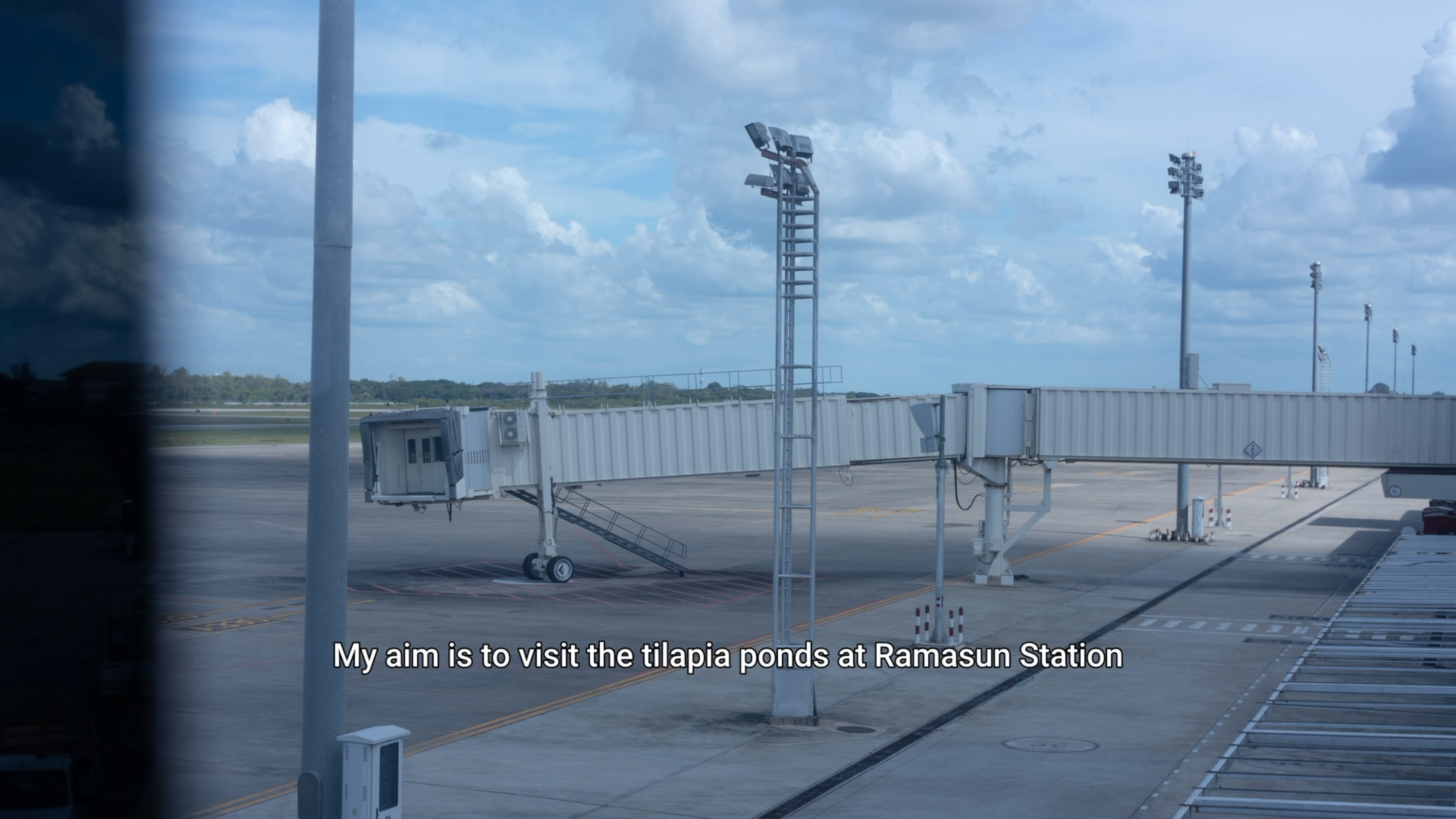

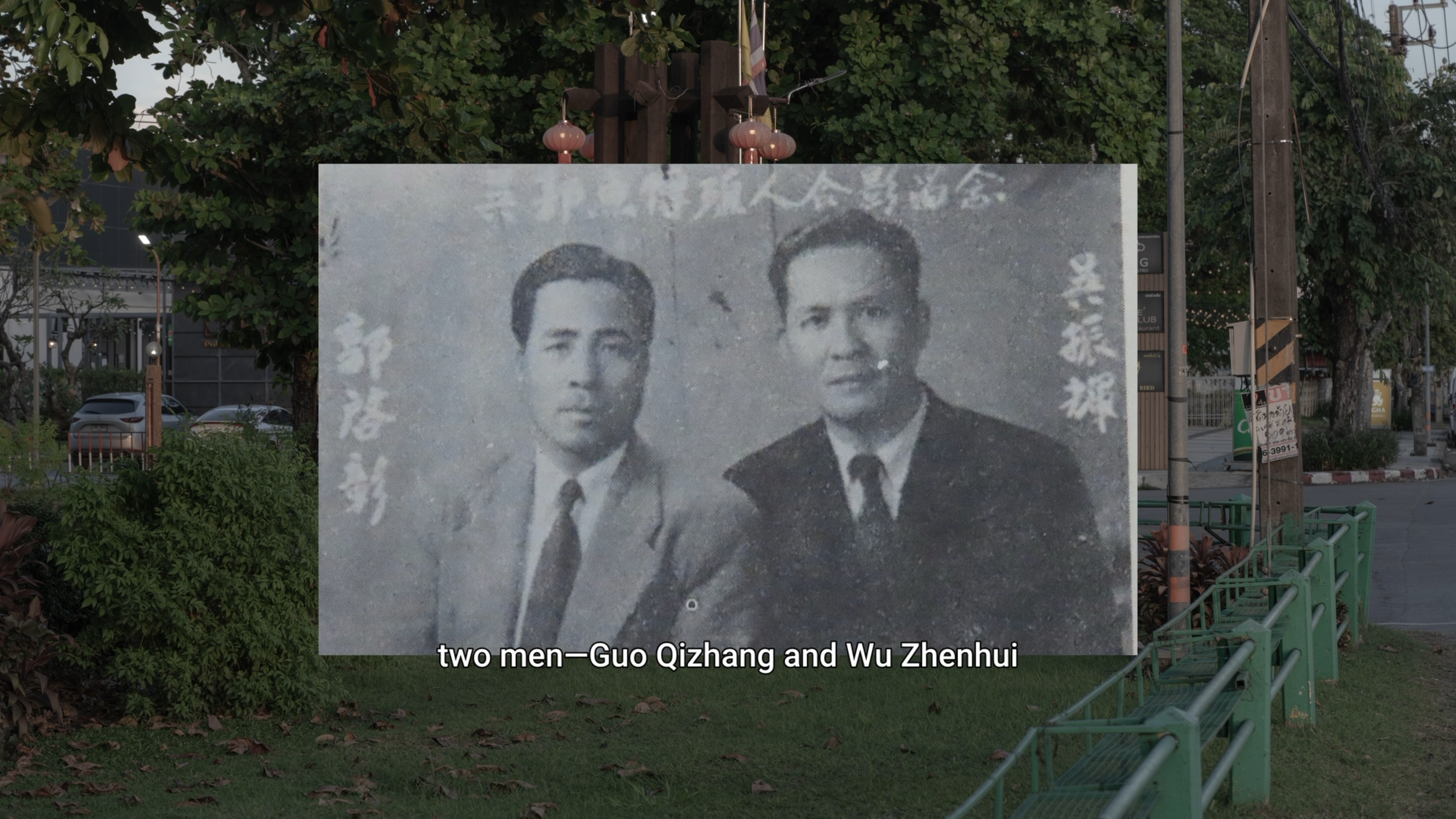

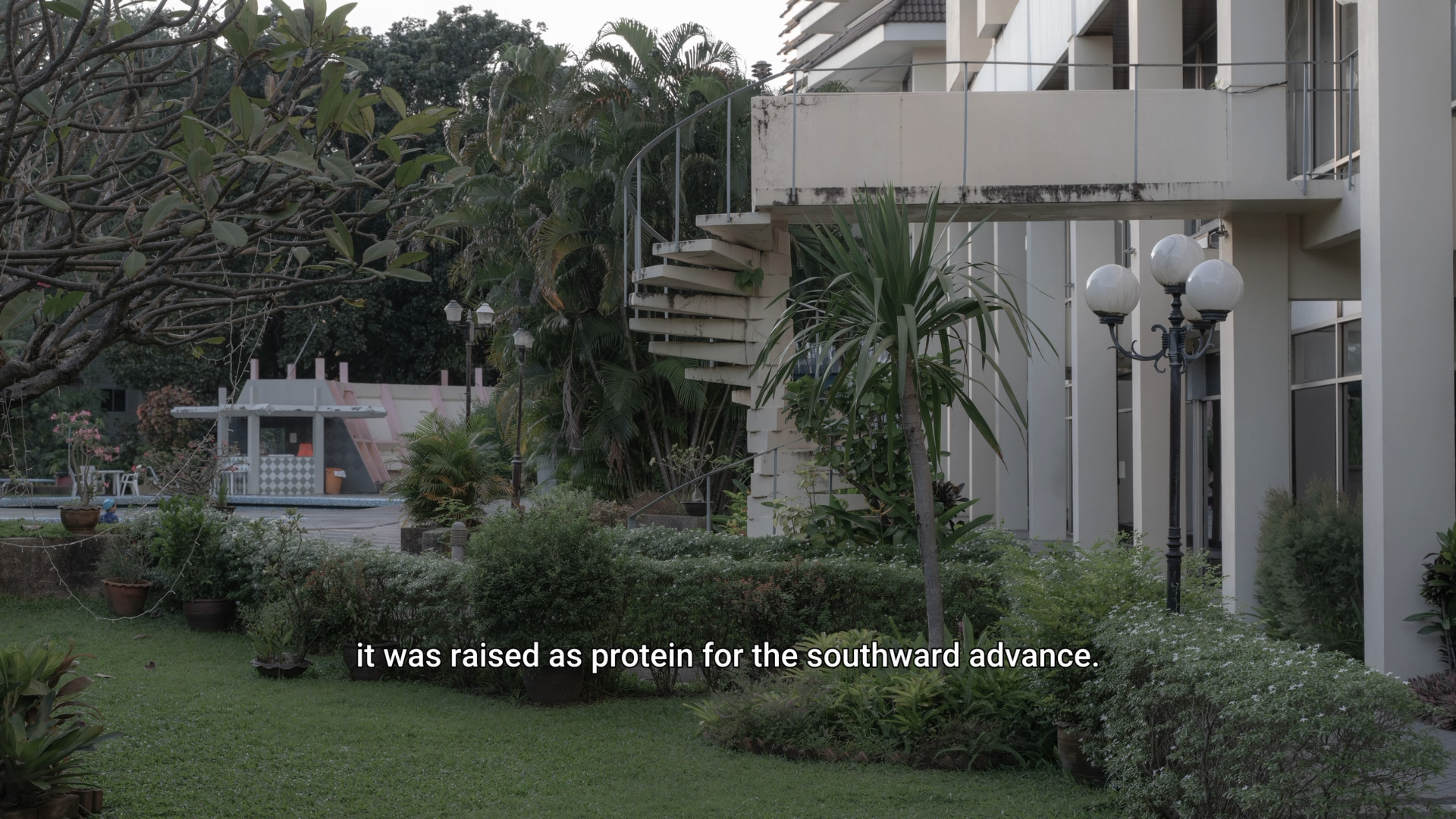
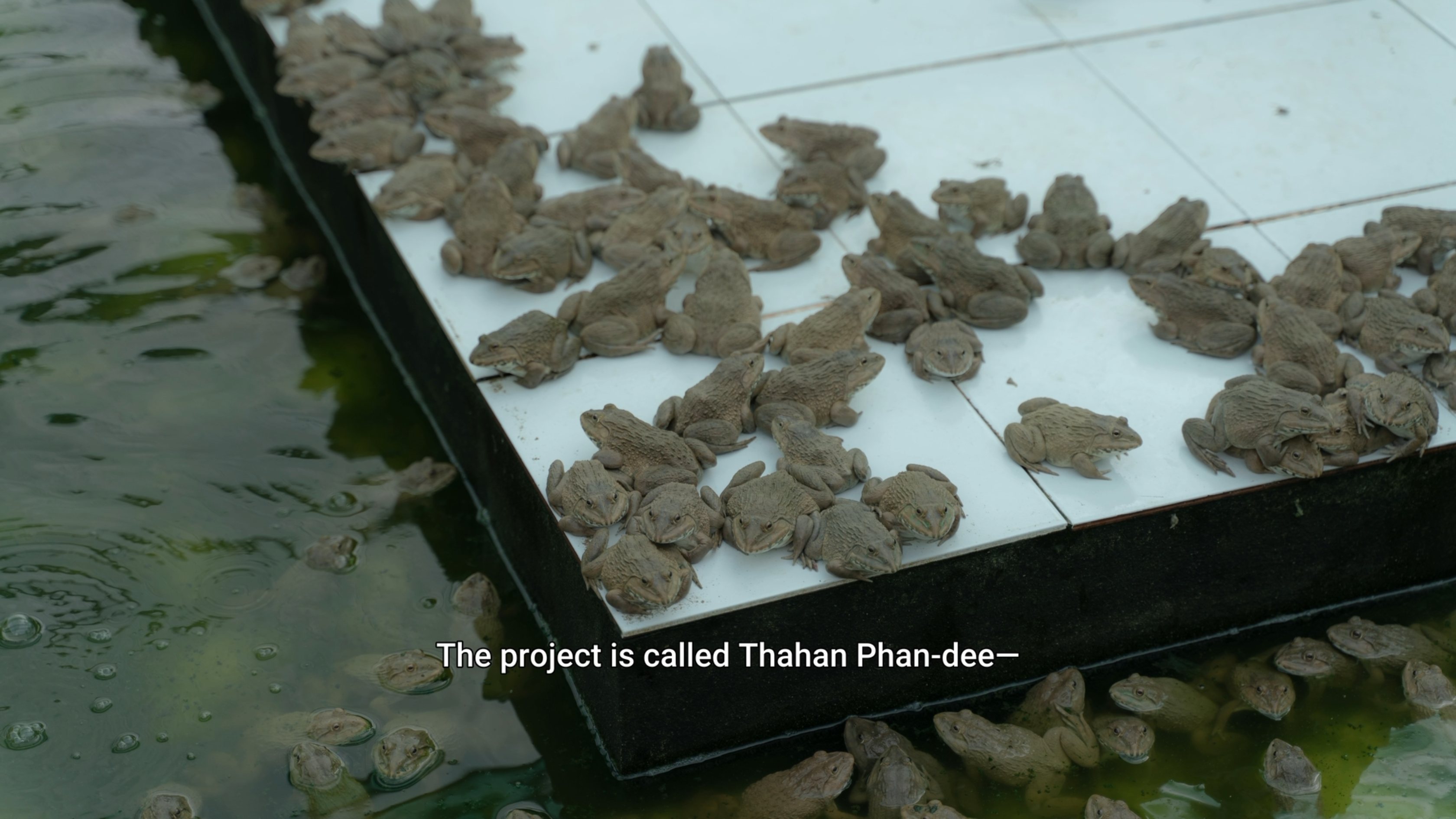
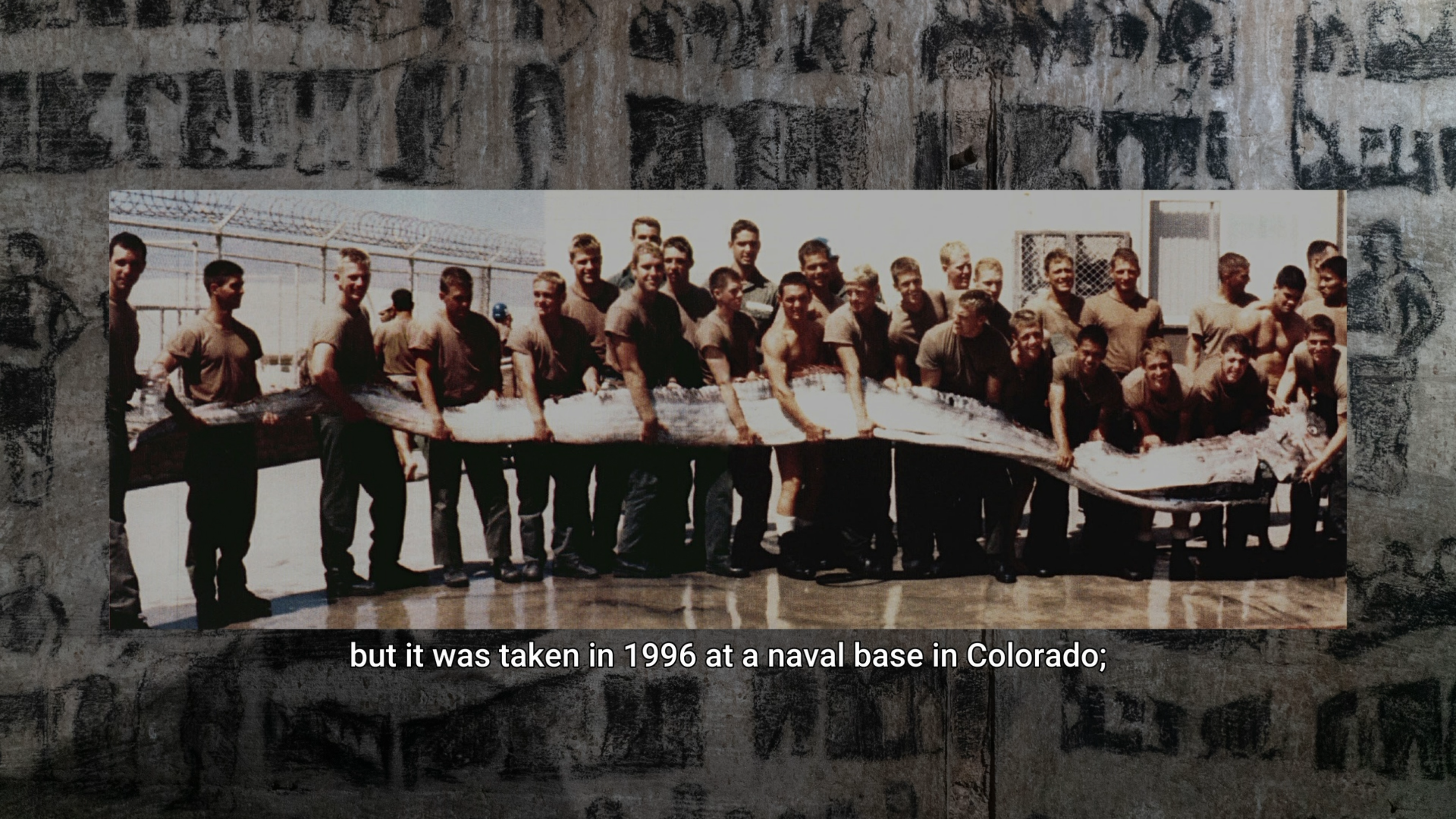
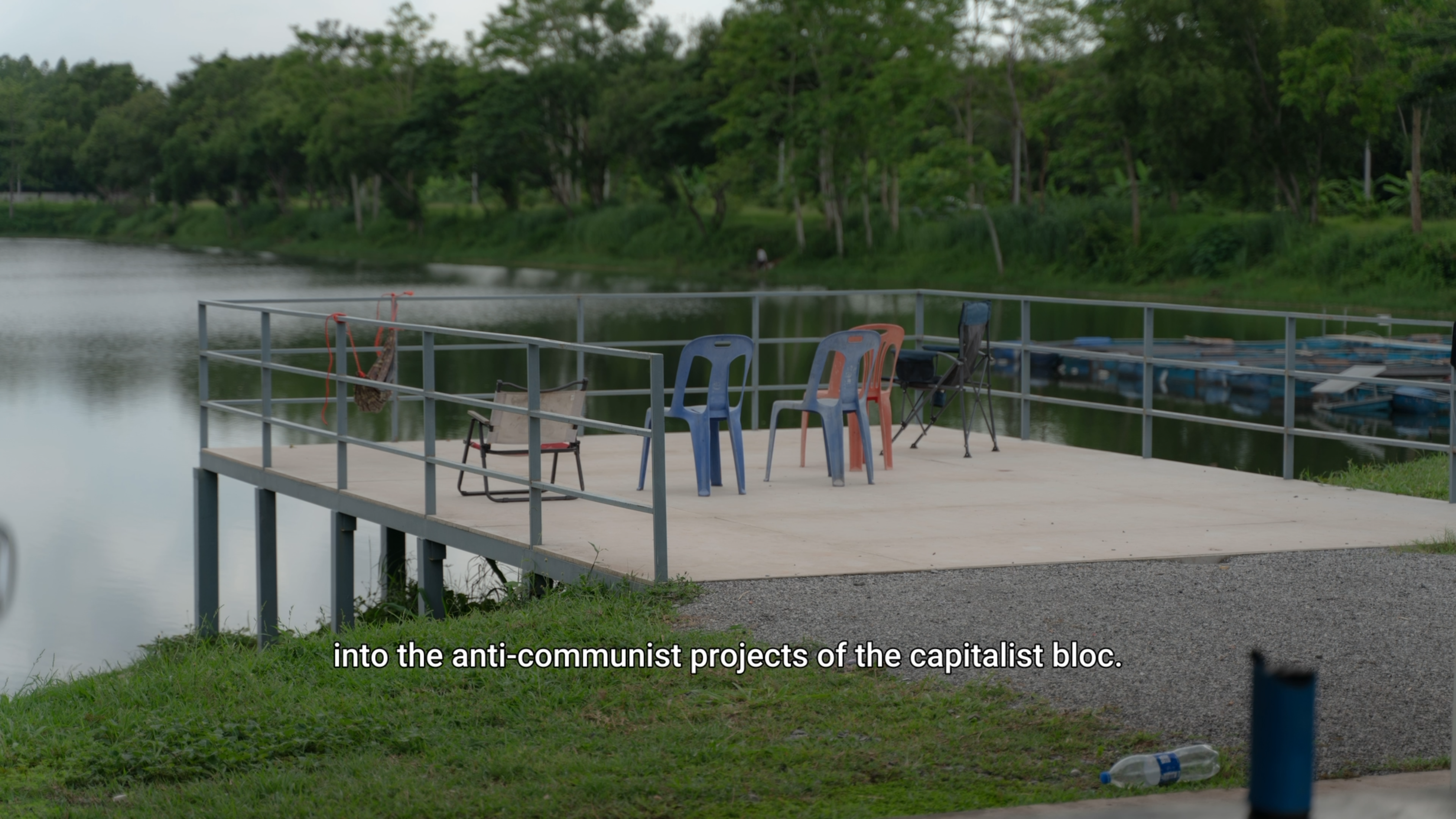
Stills from Fish of Empire, 2025
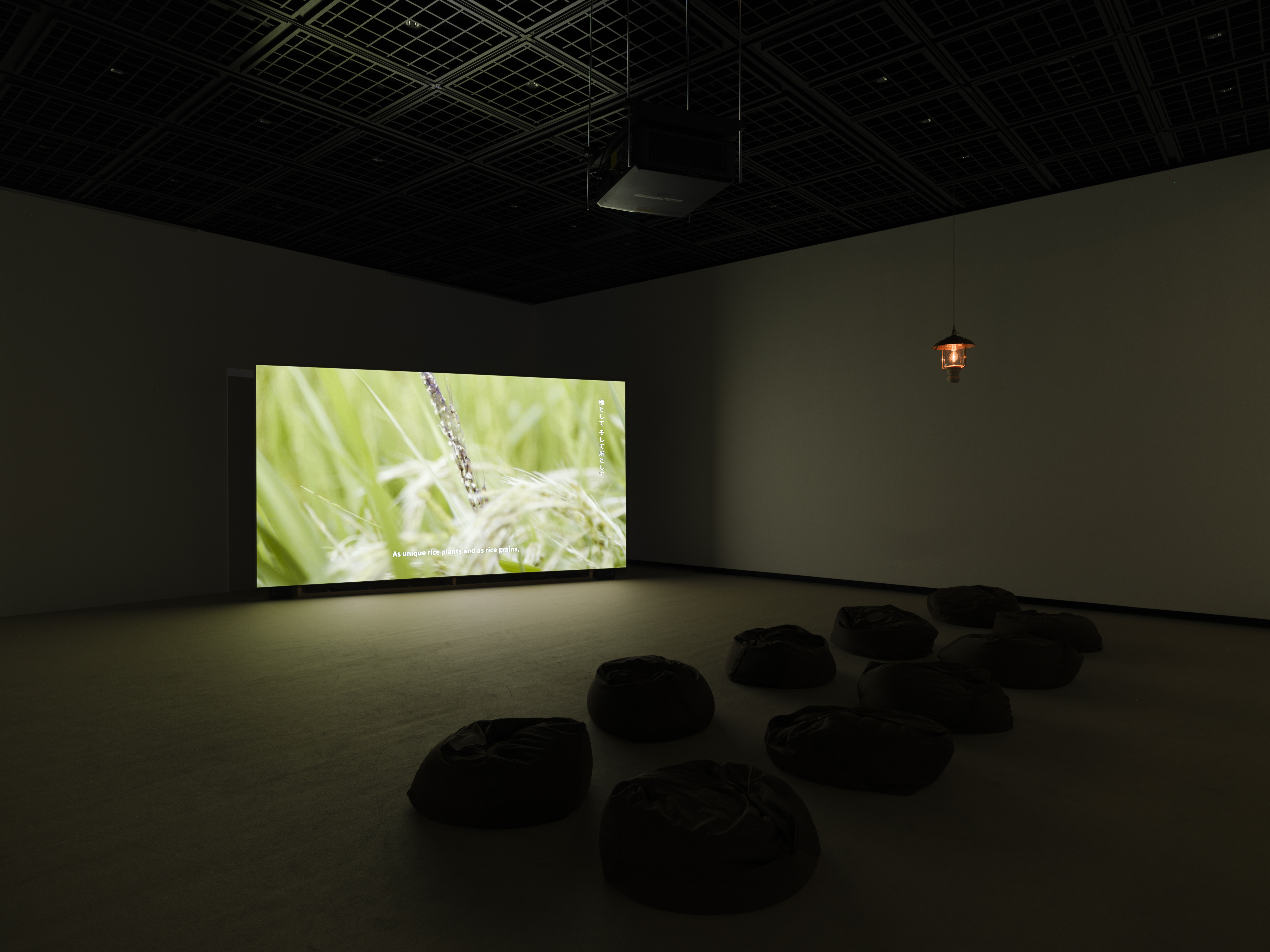
Installation View from Commission Project: Yebisu International Festival for Art & Alternative Visions 2025
Courtesy of Tokyo Photographic Art Museum (Photo: Nakagawa Shu)
韓国語で酒を意味する「술」には、水を示す「수」と火を示す「불」の合成語だという説があり、 発酵で泡立つ酒が「水のなか火」によって沸騰しているように見えたからだとされる。 本作は、日本統治下の朝鮮半島における稲作や酒造の調査をもとにしたドキュメンタリー・ヴィデオエッセイで、 「酒」というレンズを通して植民地化のプロセスや痕跡を描いている。
日本統治期の朝鮮では、品種改良された水稲品種や分離培養された麹・酵母の導入、醸造所の集約化が、食糧増産や税収増大を目的に行われた。 こうした影響は消えることなく、今でも韓国では、当時の品種や日本式の麹が用いられている。米や酒における統治の痕跡は、 遺伝情報や菌といった目に見えない存在に刻み込まれており、酒の香りや米の食を生み出し続けている。 本作は、複数のインタビューや歴史資料、エッセイを行き来しながら、不可視のまま残存する「水のなかの火」を浮かび上がらせる試みである。
According to one etymology, the Korean word for alcohol, sul, combines su (water) and bul (fire), as the froth of fermenting liquor was thought to resemble water brought to a boil by an inner flame. This documentary video essay draws on field research into rice cultivation and brewing on the Korean Peninsula during Japanese colonial rule, using sul as a lens to examine the mechanisms and legacies of colonization.
During the occupation, the promotion of modified rice cultivars, laboratory-isolated koji and yeast, and the consolidation of breweries aimed to increase food production and tax revenue. These changes left a lasting imprint: many Korean farmers and brewers still use colonial-era rice strains and Japanese-style koji and yeast. The governance of grain and drink is thus embedded in invisible agents—genes, microbes, and legal frameworks —that continue to shape contemporary flavors. Interweaving interviews, archival materials, and essayistic narration, the film explores this lingering, unseen “fire in water.”
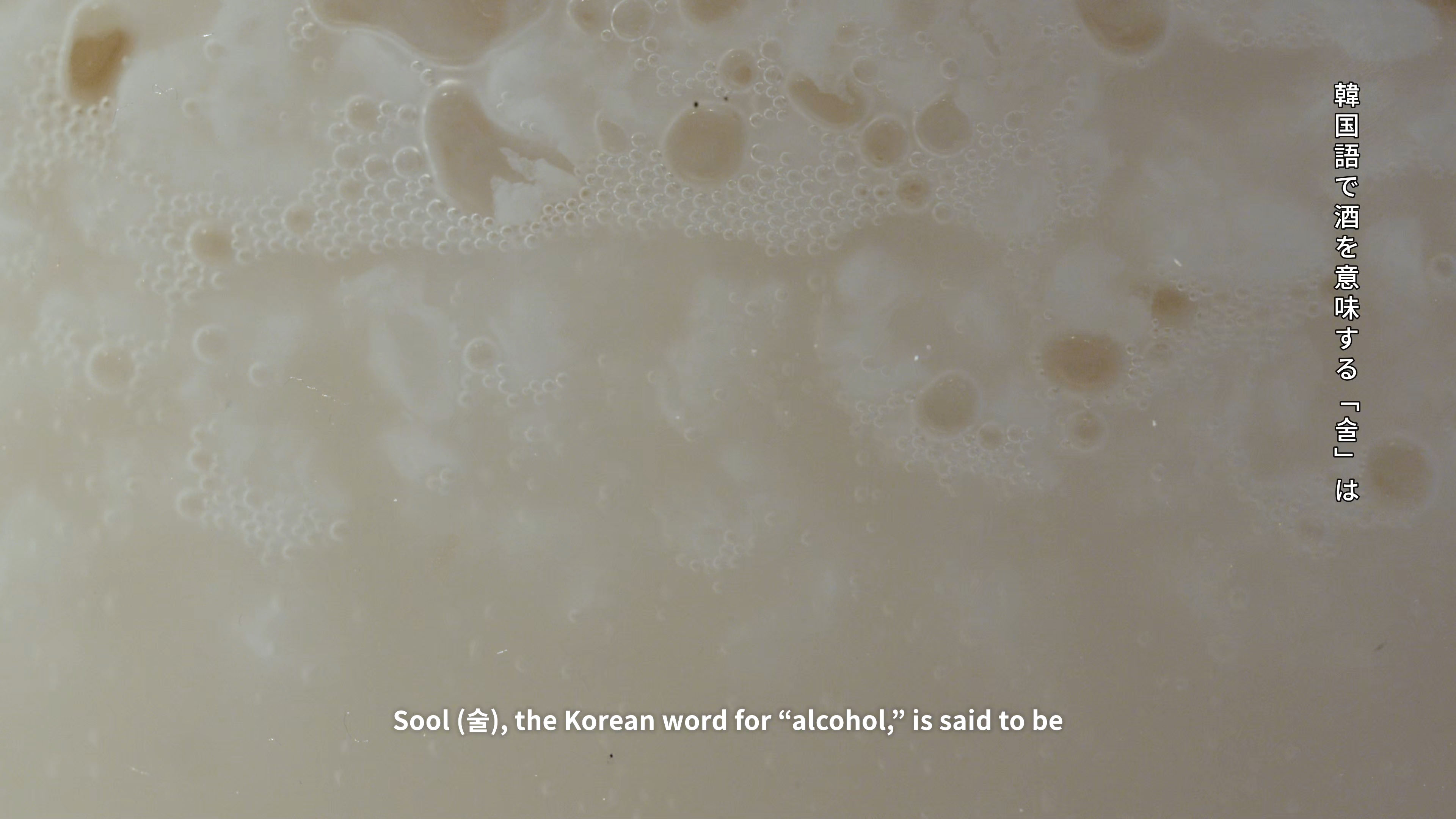


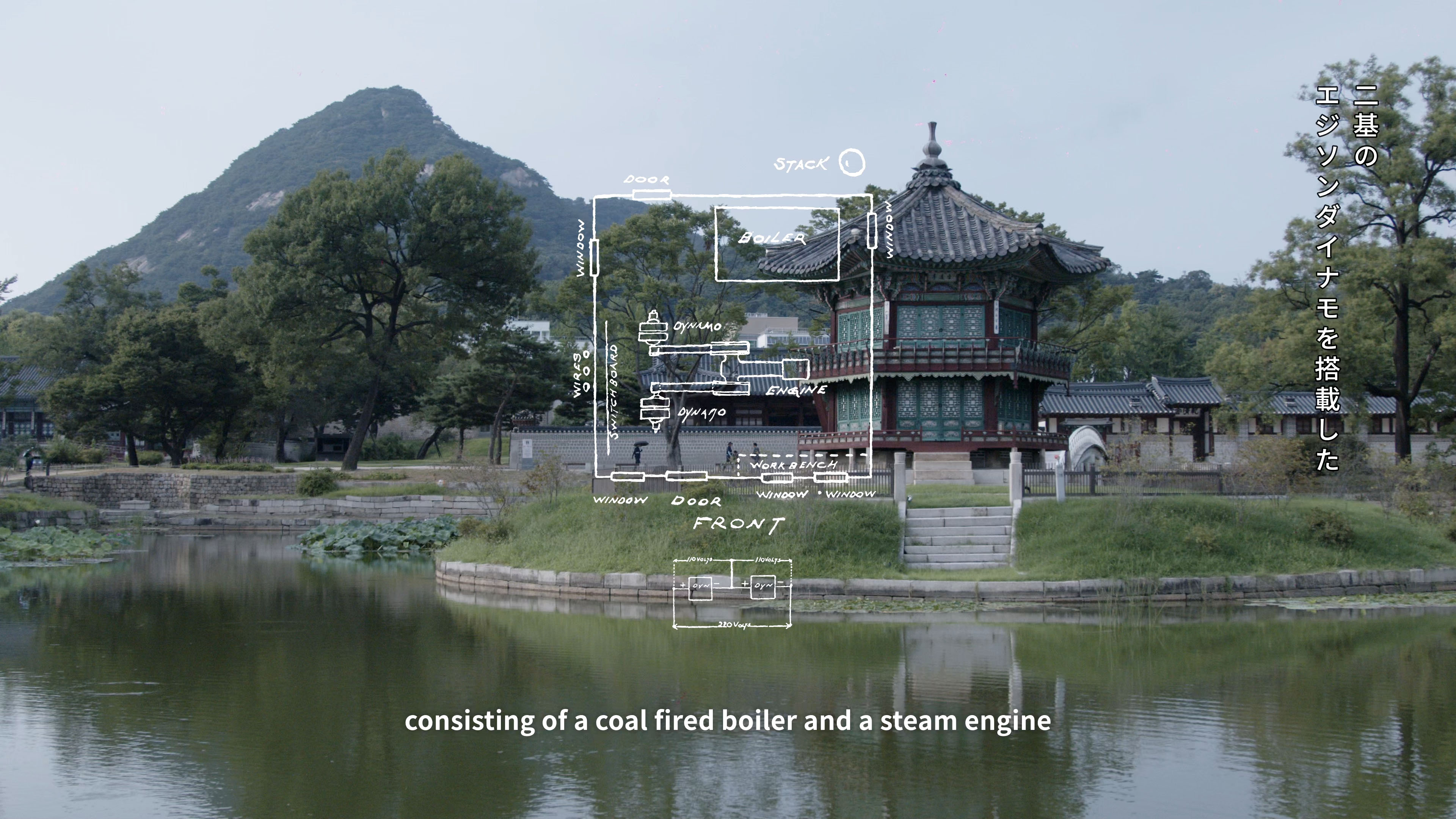

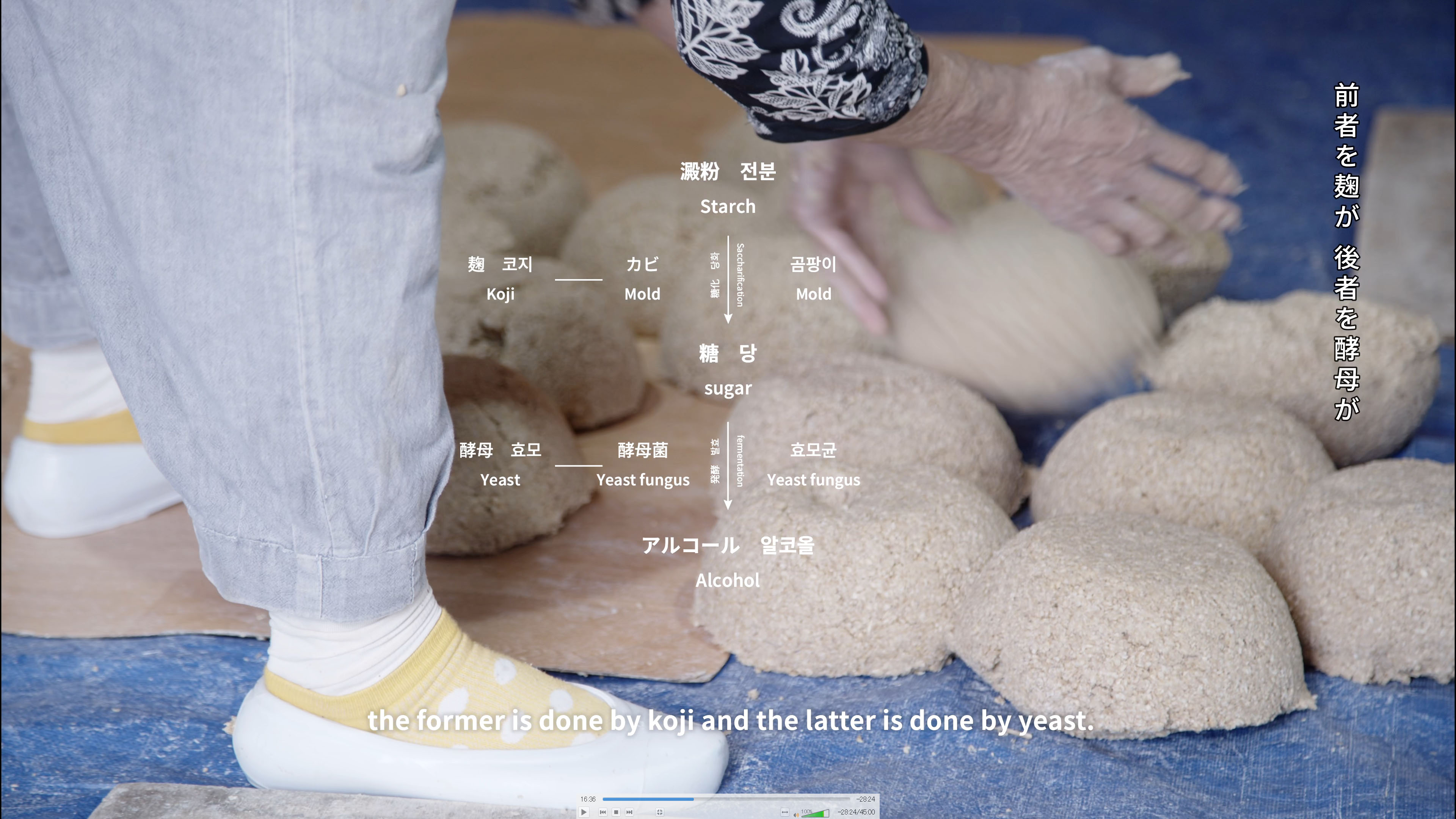
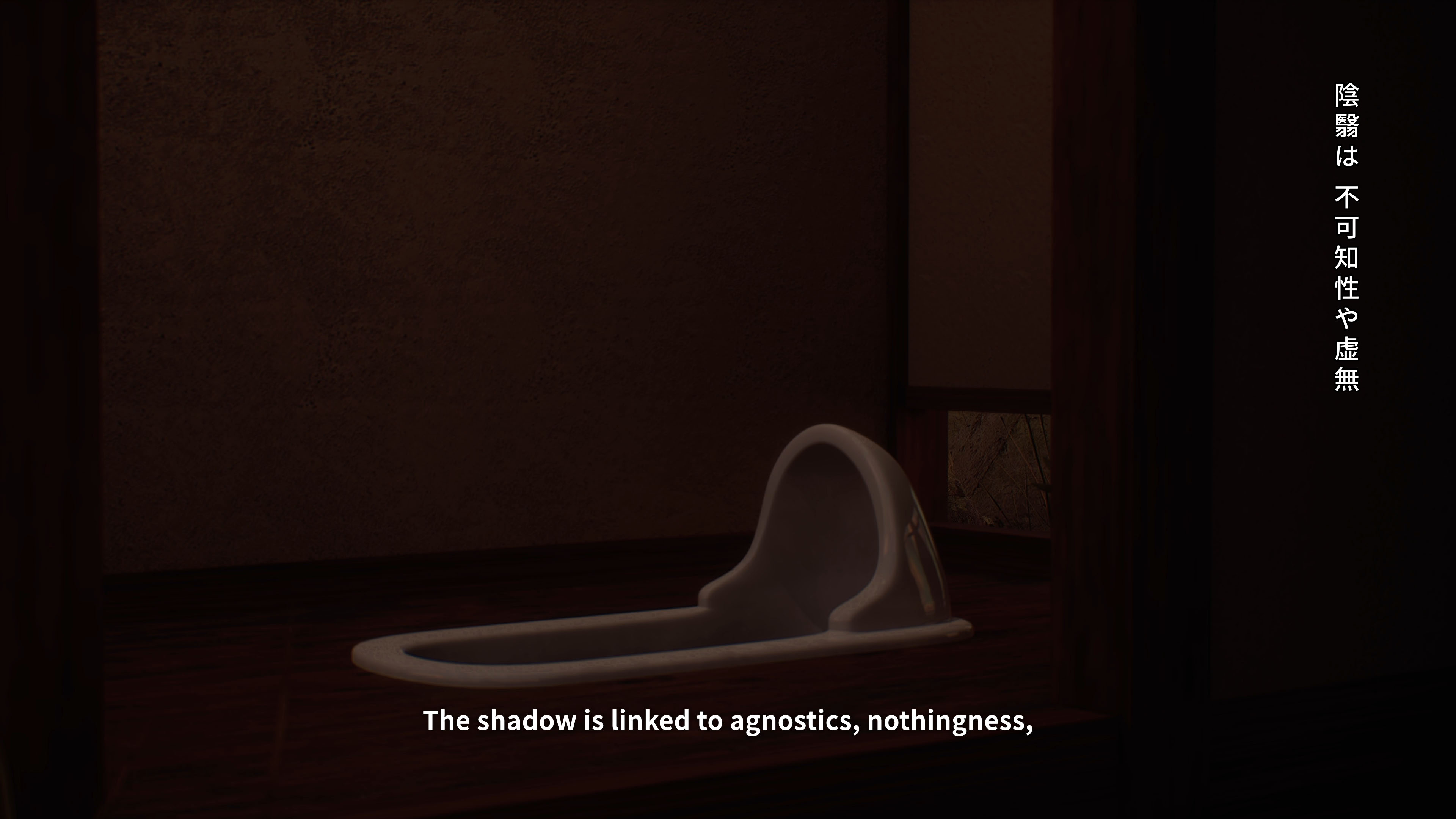
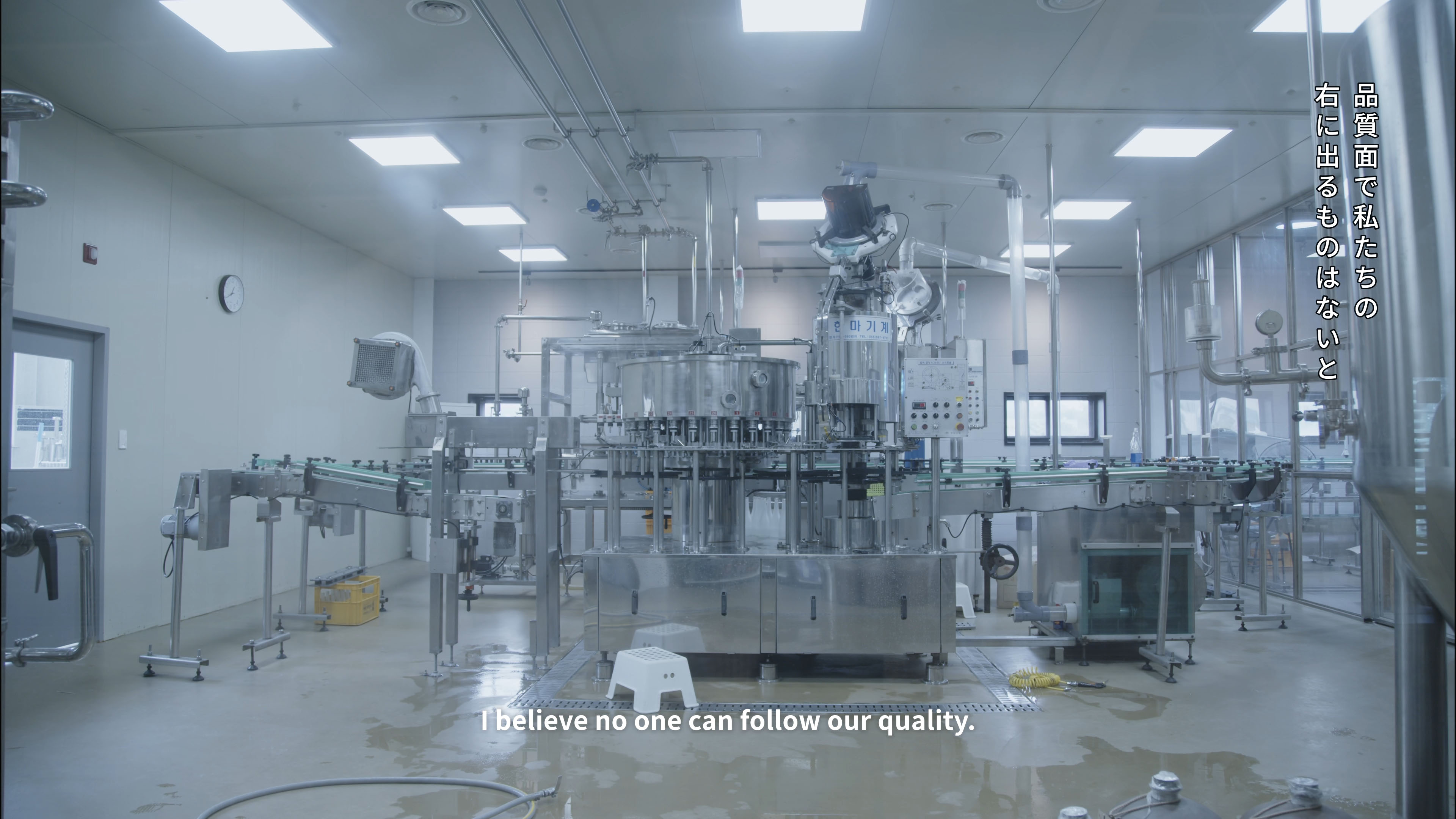

Stills from Fire in Water, 2025
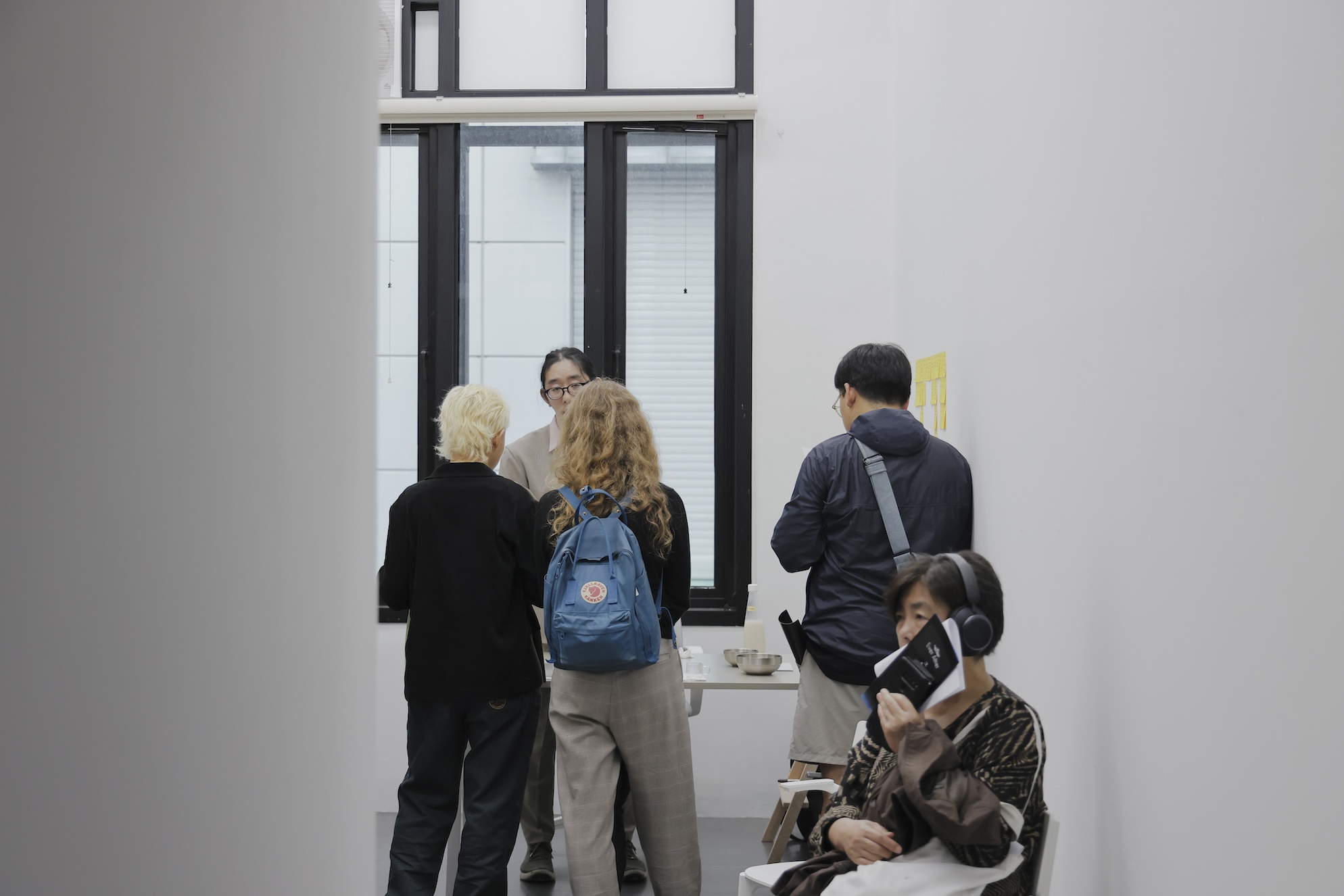
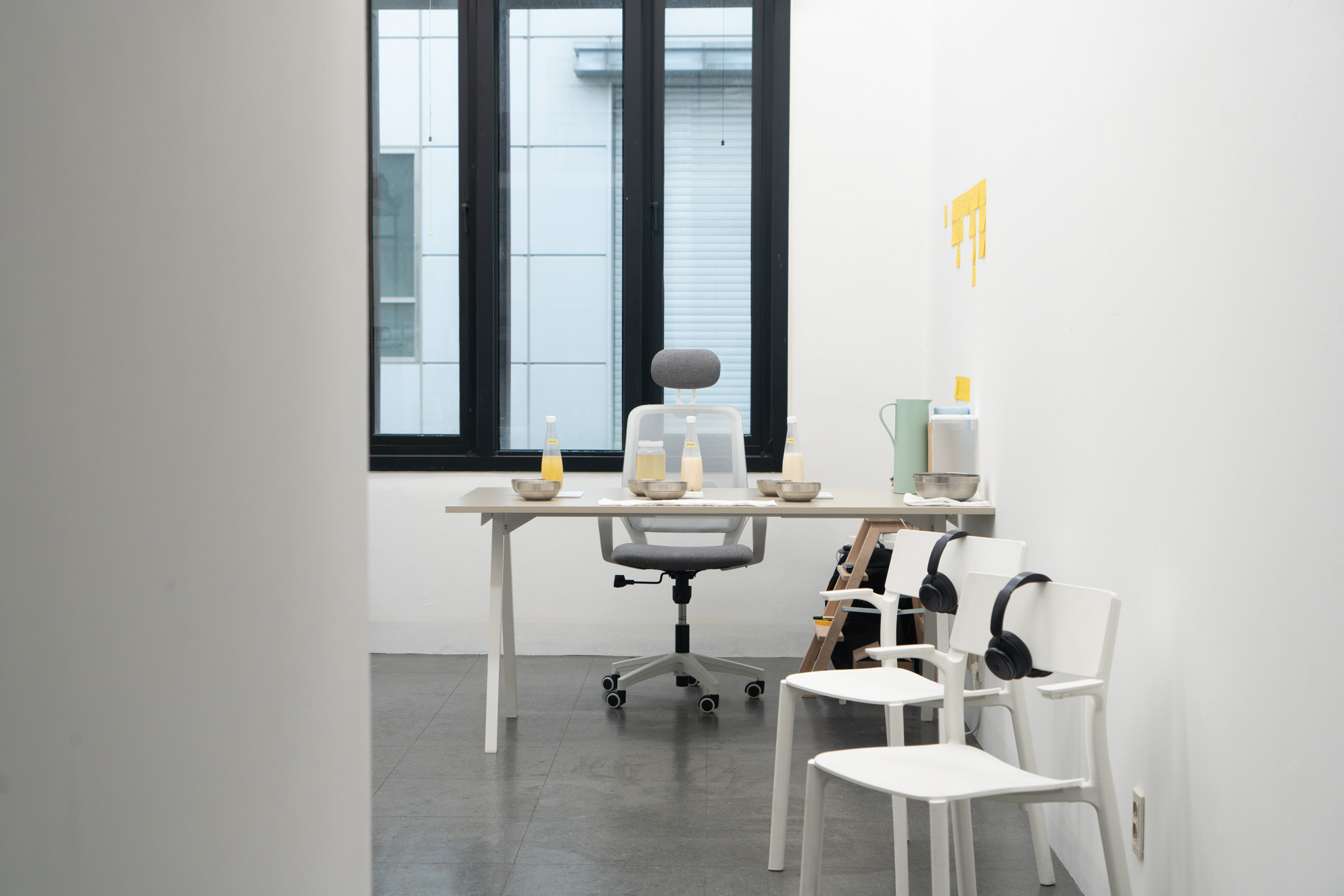
Installation view at "Nanji Residency Open Studio: Ever After", 2023
《Fire in Water》は、韓国の醸造と稲作における日本統治時代の影響に関するリサーチに基づくレクチャーパフォーマンスである。 この作品では、韓国と日本という非常によく似た2つの文化がどのように衝突し、一方が他方を同化し、あるいは他者化したかについて、 細菌や微生物、法制度、規範といった目に見えない存在を通して検証している。 タイトルの「水の中の火」には、こうした目に見えない存在の行為主体性への関心が反映されている。
この作品では、韓国と日本の醸造方法の類似点と相違点についてのリサーチに基づき、日韓両国の食材や醸造法を組み合わせて醸造された酒が提供される。 韓国と日本の醸造法は非常に似ており、日本統治時代に多くの日本の醸造法が韓国に伝わった。 それは、非常によく似た構造を持つ2つの文化が互いに翻訳される過程であり、また融合する過程でもあった。
19世紀末以降の文化的混淆は、韓国と日本の酒の物質的差異の喪失につながったが、それは両者の差異が失われたことを意味しない。 韓国と日本の醸造文化の混淆は、両者の同化をもたらしたのではなく、むしろ、物質的なレベルには還元できない両者の違いを浮き彫りにしているように思われる。 比較文学研究者のエミリー・アプターは、翻訳とは2つの異なる言語間の透明な媒介のプロセスではなく、 2つが衝突し混ざり合う紛争地帯が生み出される過程であると述べているが、この作品においてオーディエンスは、 まさしく2つの文化が微生物や制度をまきこみながらぶつかり合う翻訳地帯を、その舌で味わうことになる。
Fire in Water is a lecture-performance built on research into how Japanese colonial rule shaped brewing and rice farming in Korea. The work looks at two closely related cultures—Korea and Japan—and asks how they clashed, assimilated, or othered one another through invisible agents such as bacteria, microbes, legal rules, and social norms.
Drawing on a study of the parallels and gaps between Korean and Japanese brewing, the piece offers a drink made by blending ingredients and methods from both sides. Japanese techniques moved into Korea during the colonial years, and because the two brewing traditions were already alike, the transfer became both a form of translation and a moment of fusion.
The cultural mixing that began in the late 19th century removed many material differences between Korean and Japanese alcohol, yet it did not erase all distinctions. Instead, it brings to light differences that cannot be reduced to physical factors alone. Comparative-literature scholar Emily Apter notes that translation is not a clear bridge between two languages; it is a contested zone where they collide and mingle. In this work the audience literally tastes that translation zone, where two cultures—and the microbes and institutions tied to them—meet on the tongue.
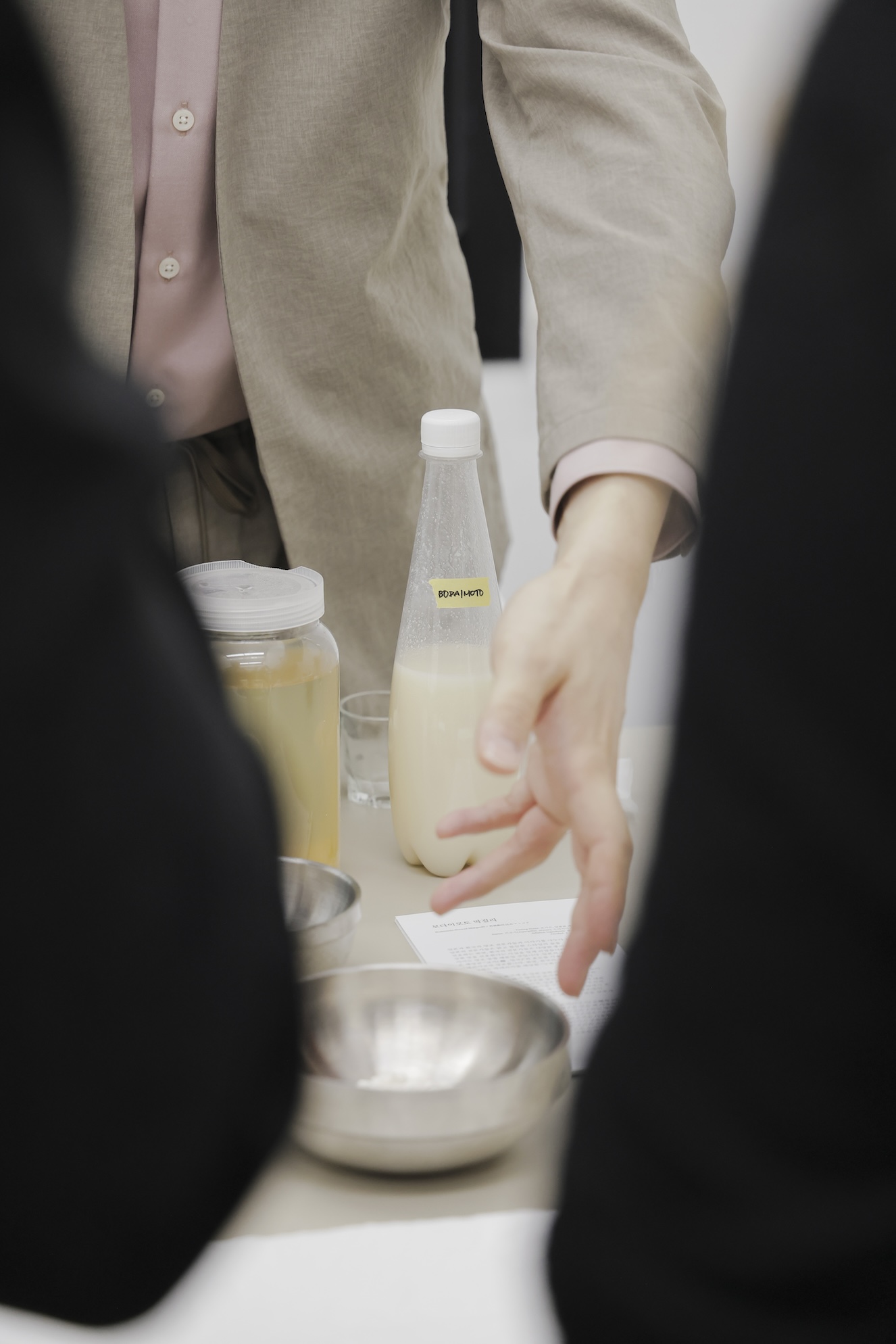
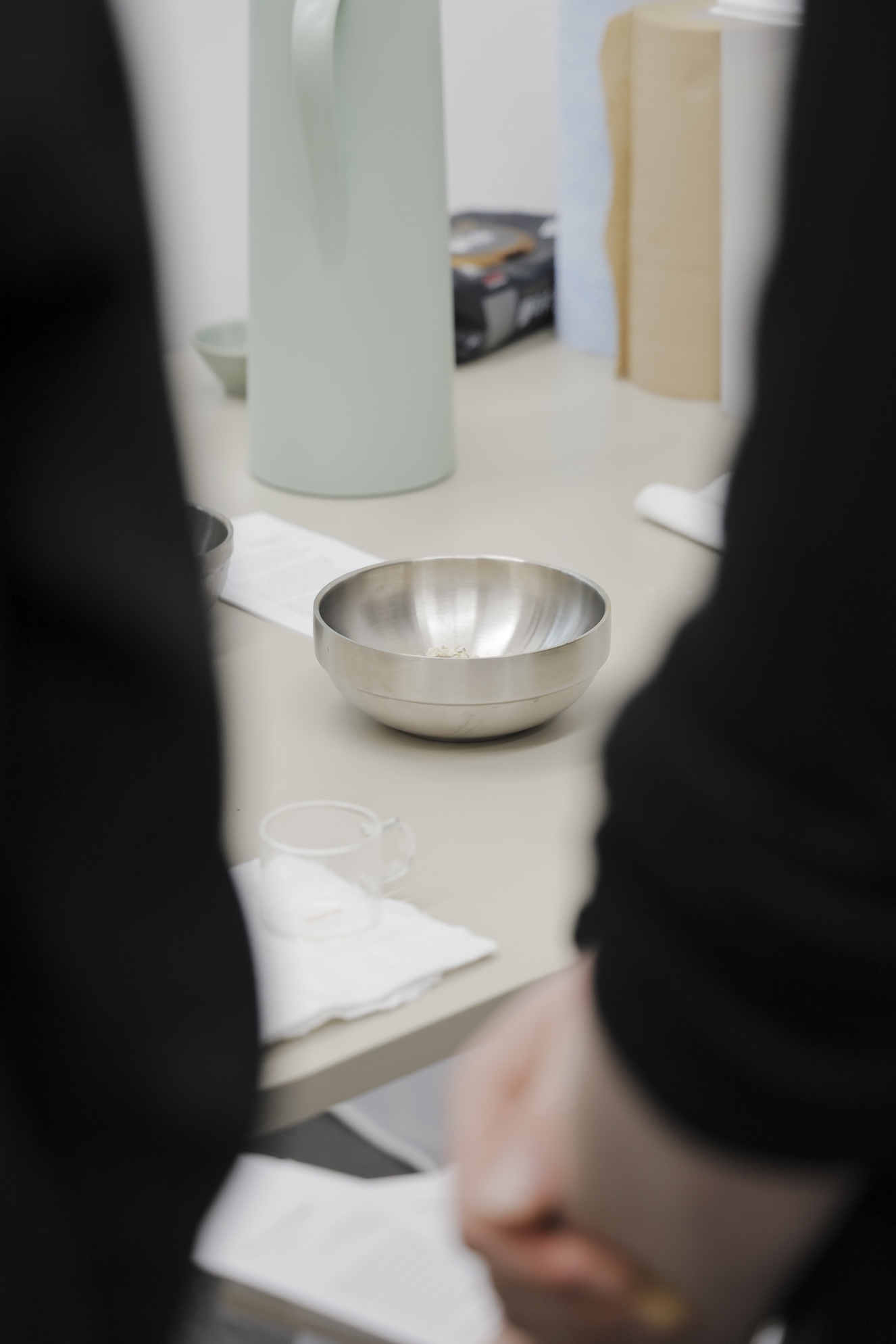
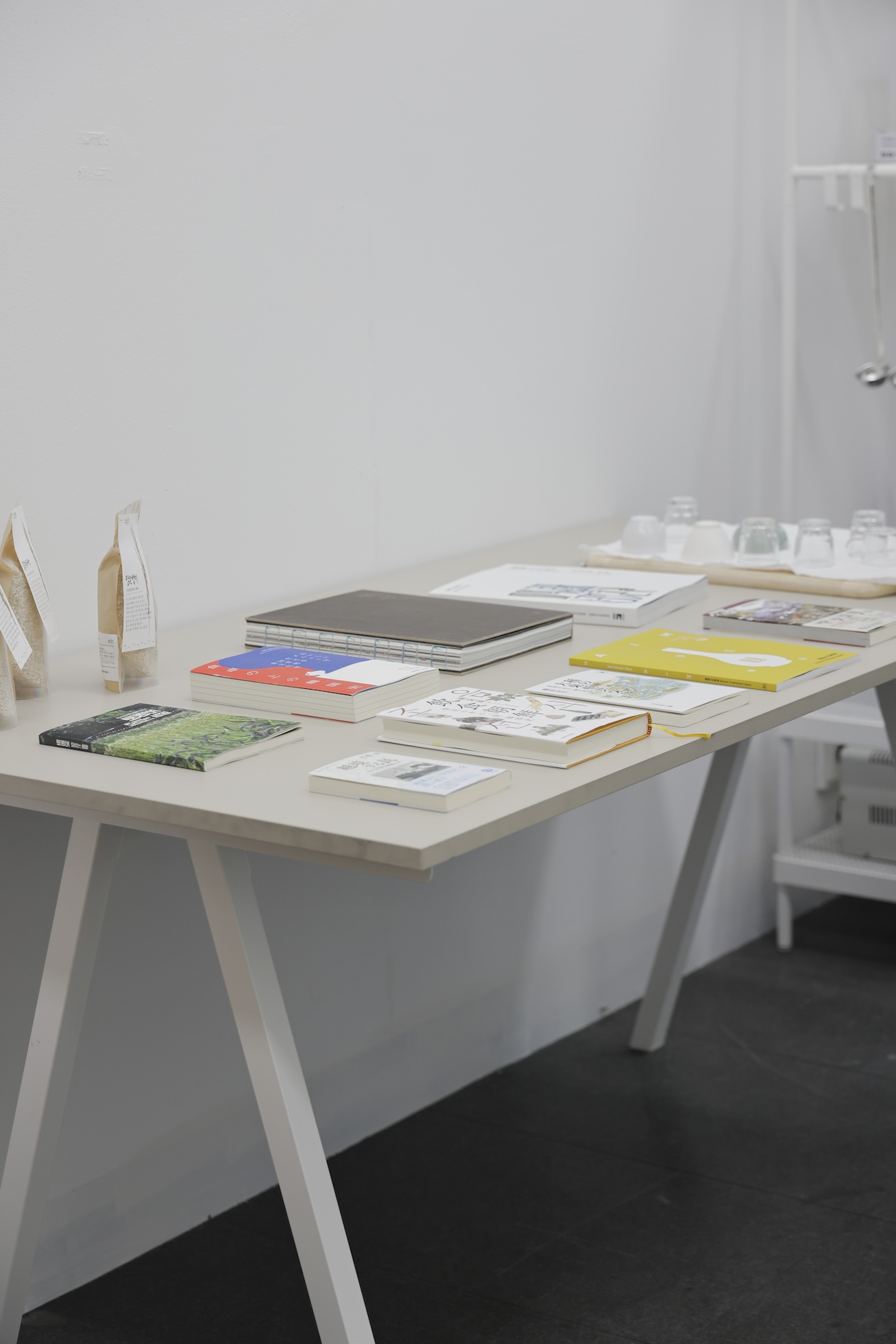
Installation view at "Nanji Residency Open Studio: Ever After", 2023
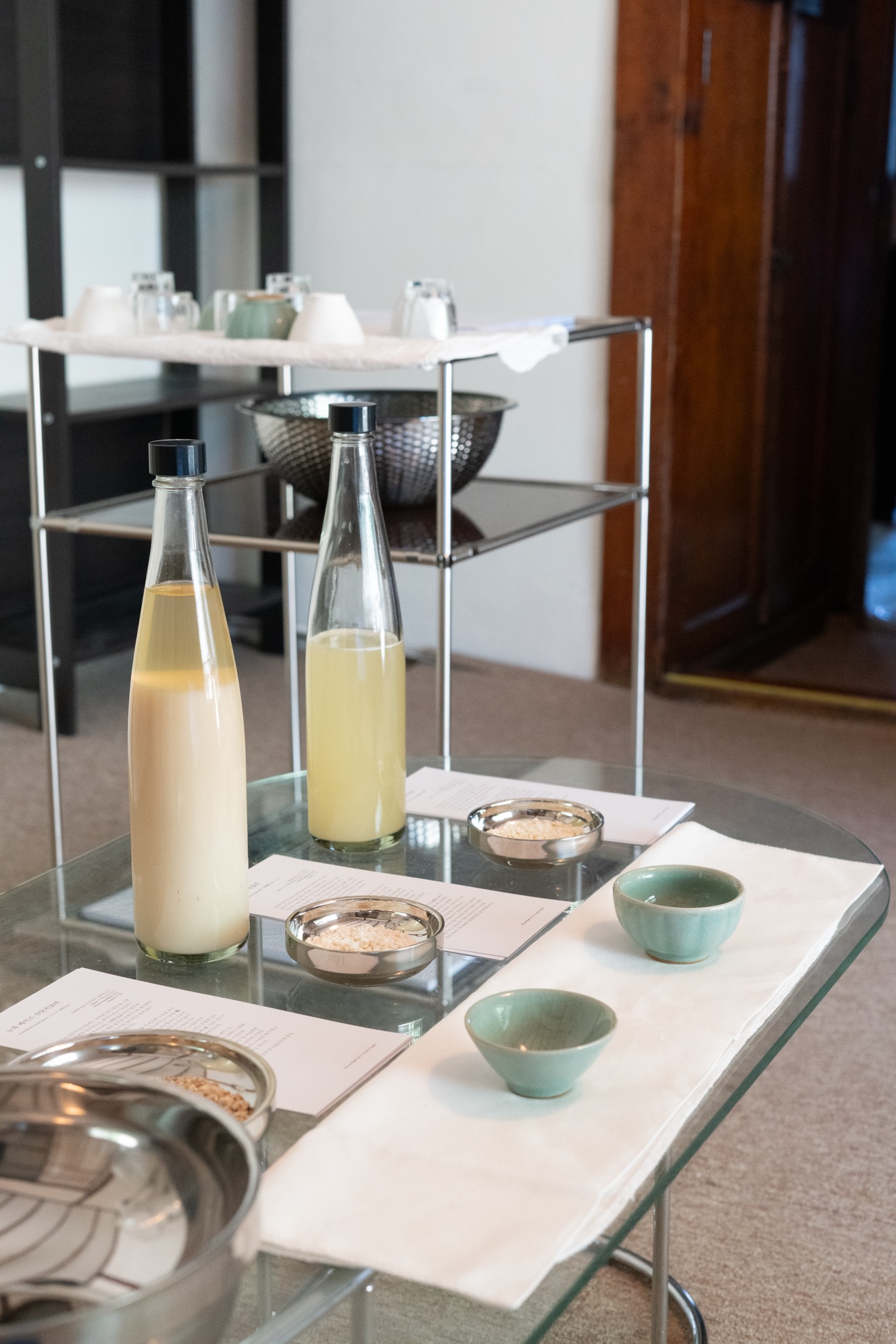
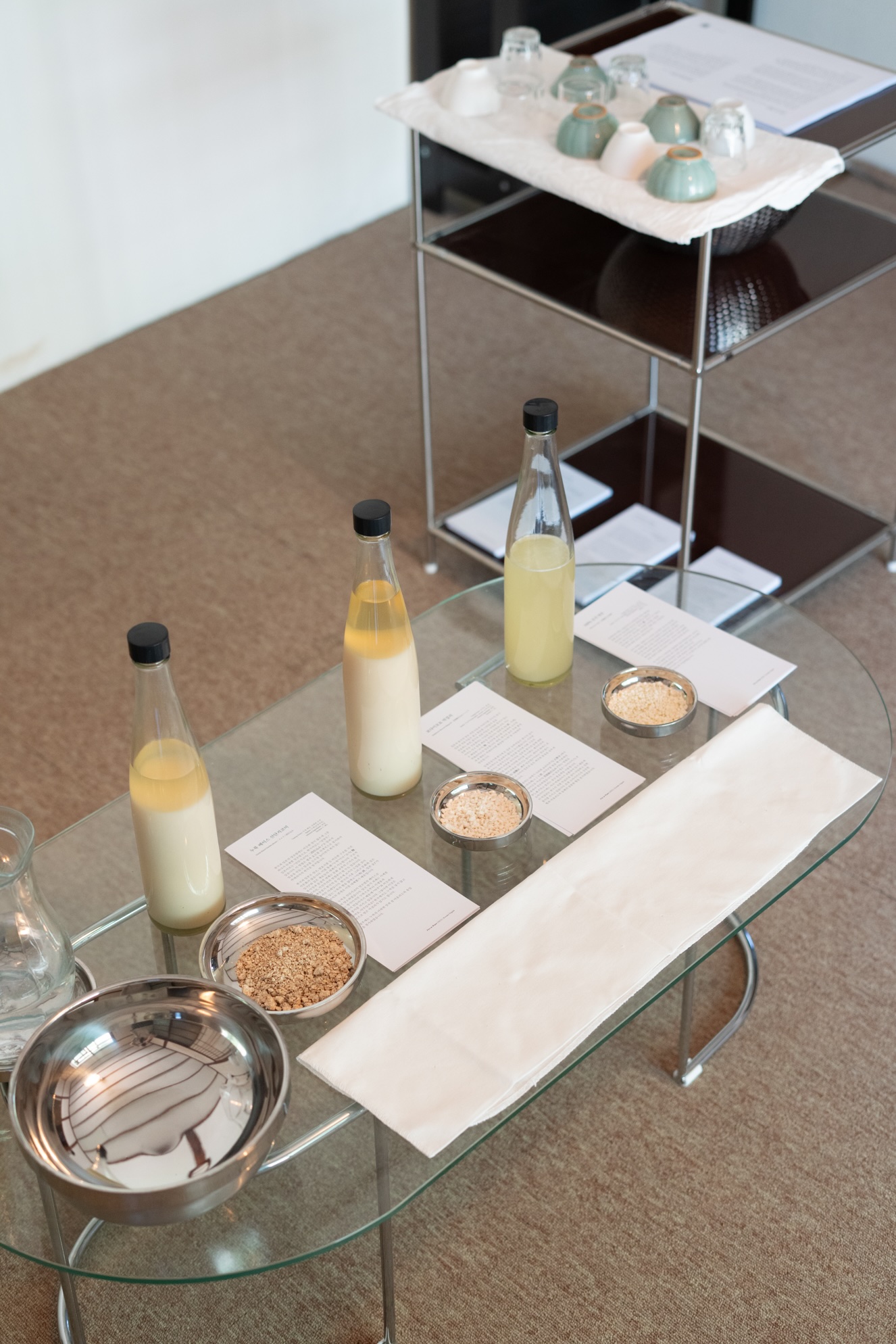
Installation view at "Eat, Drink, Art", 2024
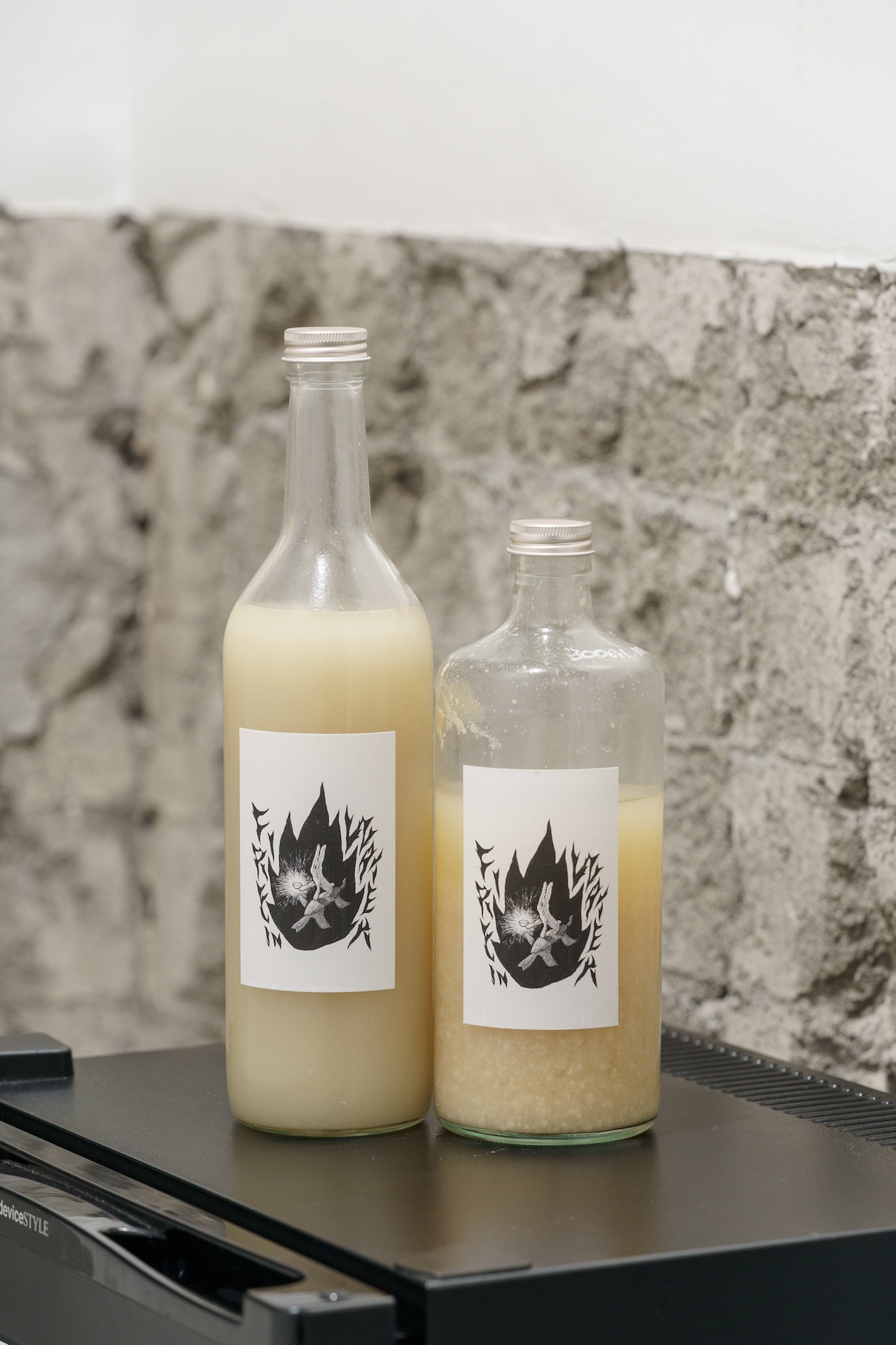
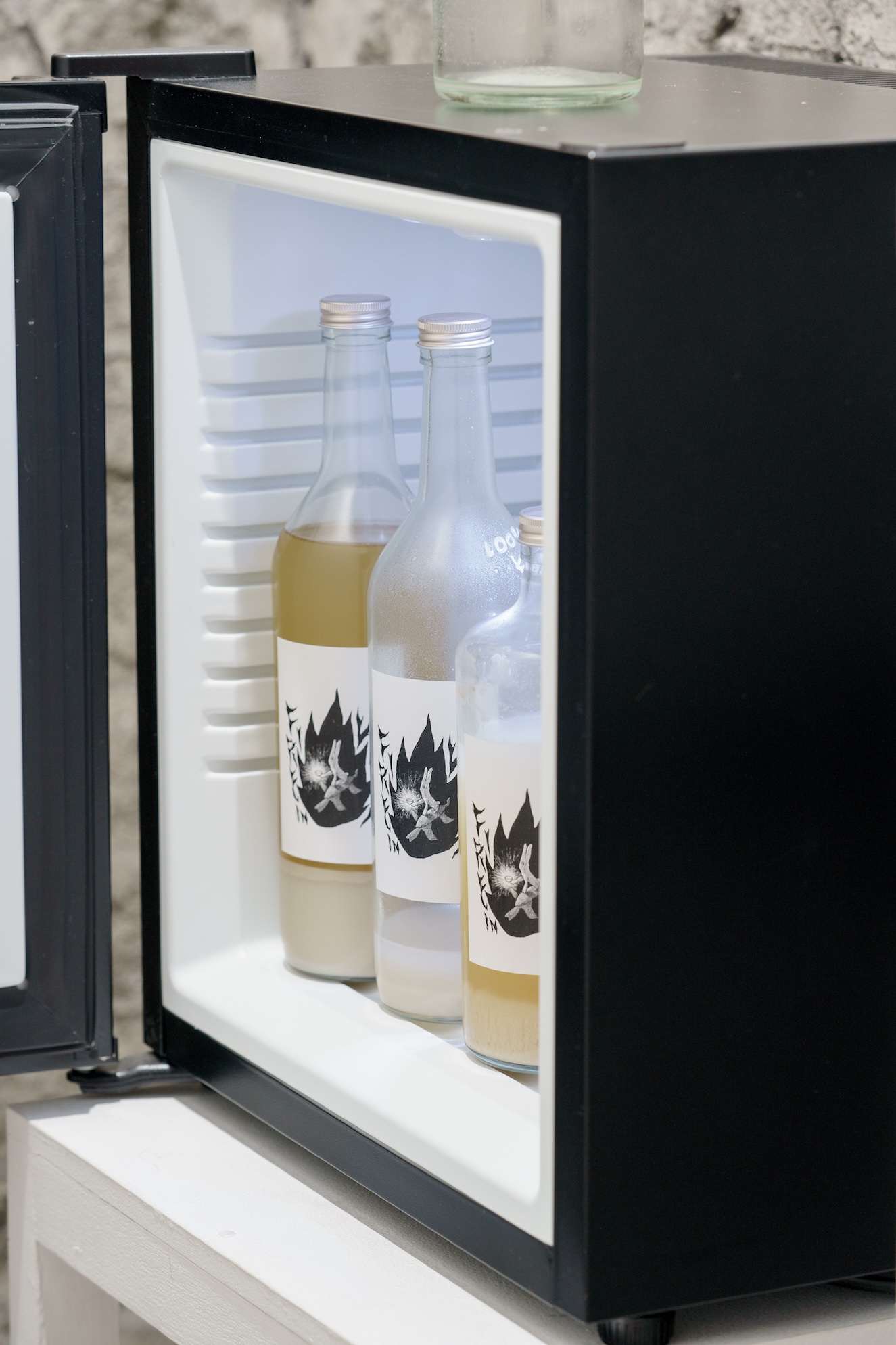

Installation view at "Ramavania", 2024 (Photo: Naoki Takehisa, Photo courtesy: the 5th floor)
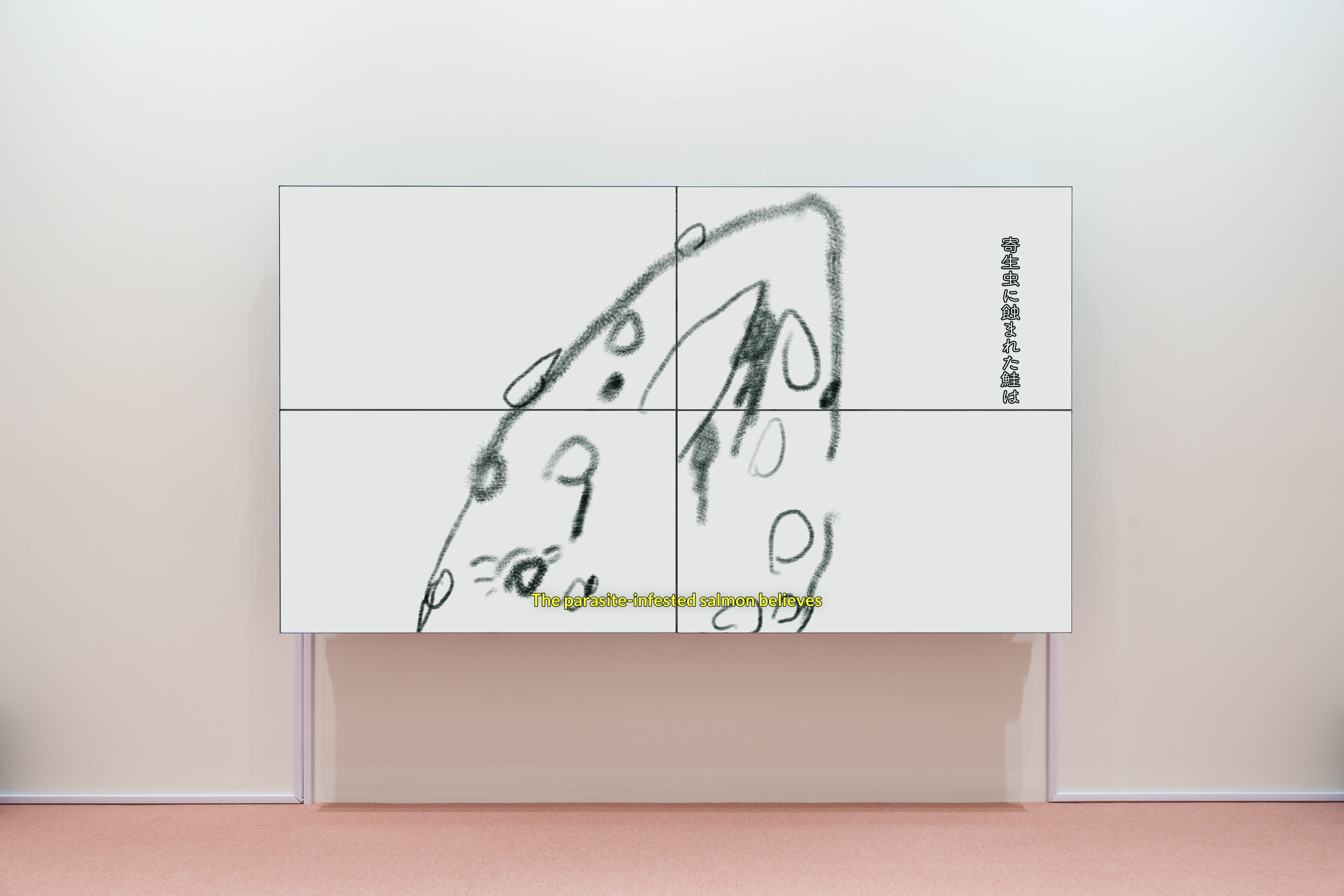
Installation view at "Bacoming Feral", 2024 (Photo: Ryohei Tomita, , Photo courtesy: Towada Art Center)
《Becoming Salmon》は、サーモン養殖の現場を舞台に、寄生虫に感染したサーモンと養殖場で働く老いた人の物語を描いたアニメーション作品です。 生命を商品や労働力に還元して管理する産業化された養殖場という環境におかれながらも、 疫病や老化によってその管理からこぼれていく存在同士である鮭と老いた人の関わり合いを通じて、 この作品は、資本主義的なシステムや経済的価値と生命の尊厳のあいだの相克を描きます。
また、このアニメーション作品は、映像作品《How to Become Salmon》とともに展示されます。 この映像作品では、《Becoming Salmon》の制作に際して、鮭であるとはどういうことかについて 永田とキュレーターやアーティスト、人類学者らが話し合う様子が映し出されています。 この作品では、鮭という物言わぬ他者への想像力がいかにして可能になるのか、その想像力の条件が議論されています。
Becoming Salmon is an animated work set in a salmon farming facility, portraying the intertwined lives of a parasite-infected salmon and an aging worker. Though both are situated within an industrialized environment where life is reduced to commodity or labor and subjected to control, their shared experiences of illness and aging place them at the margins of that system. Through their relationship, t he work explores the tensions between capitalist systems of value and the dignity of life.
The animation is presented alongside a video work titled How to Become Salmon. This companion piece documents conversations held during the production of Becoming Salmon, in which artist Nagata speaks with curators, artists, and anthropologists about what it means to be a salmon. The discussions examine the conditions under which imaginative engagement with a voiceless other—such as a salmon— becomes possible, and how such forms of imagination might take shape.
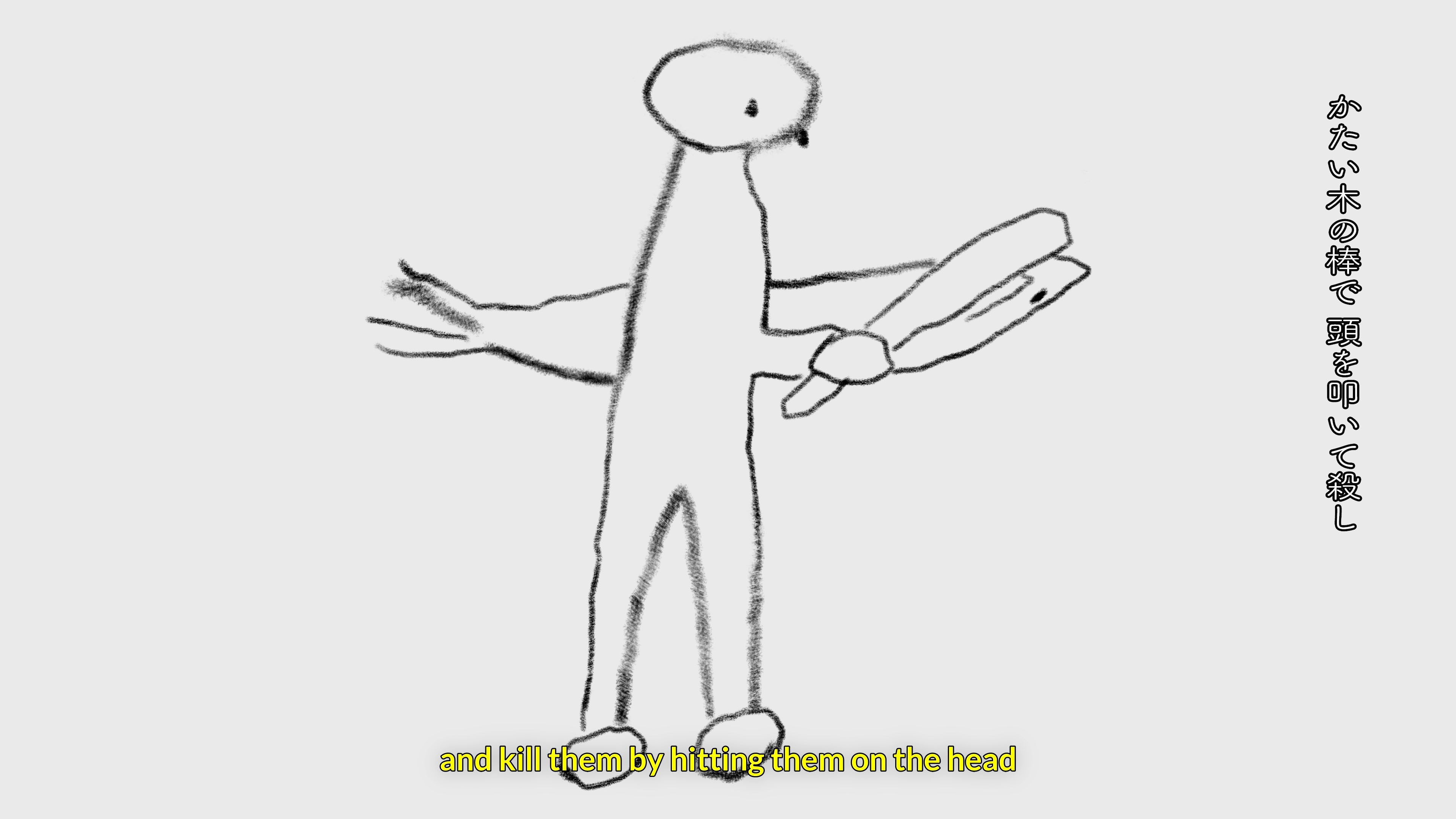
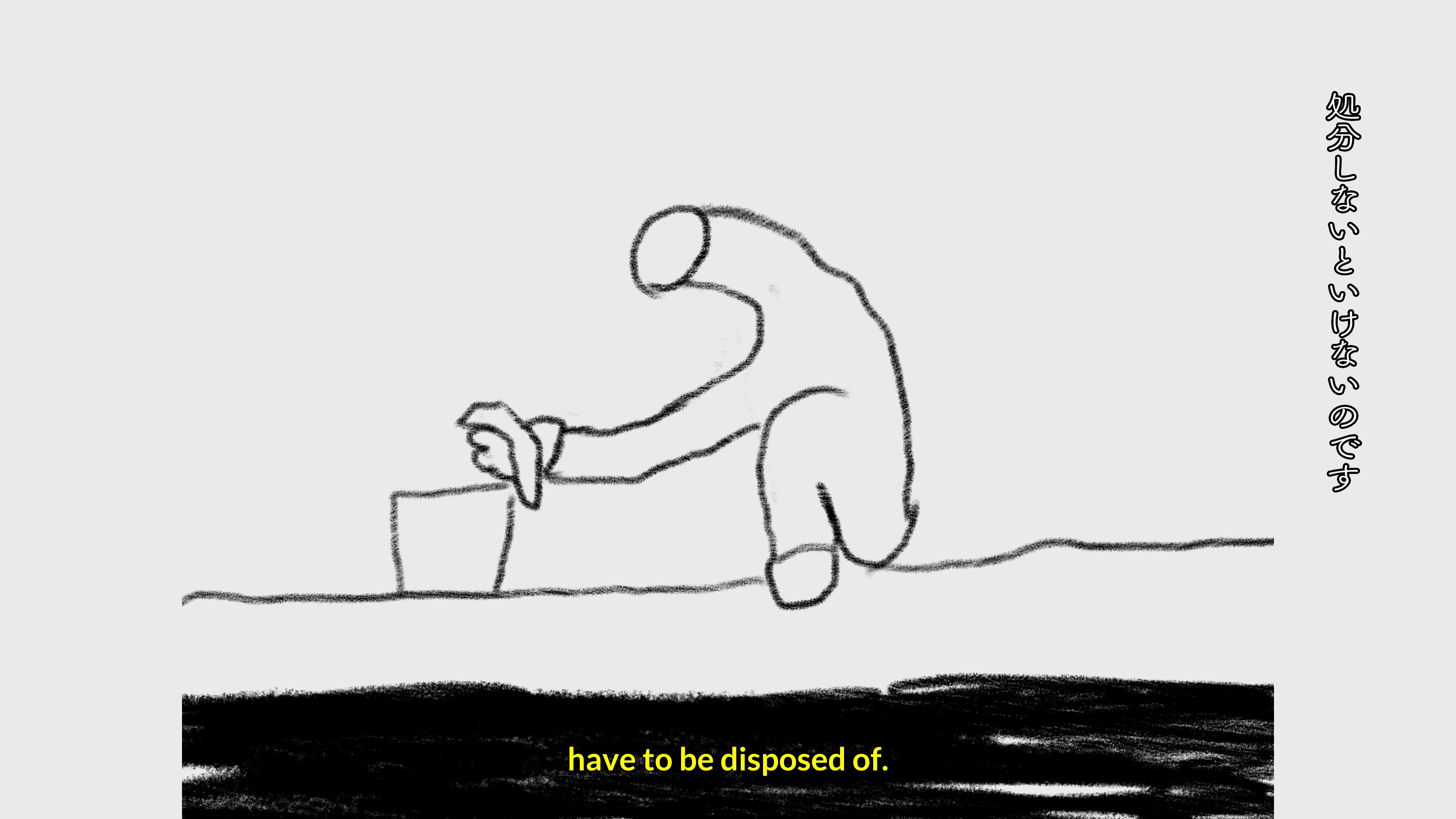
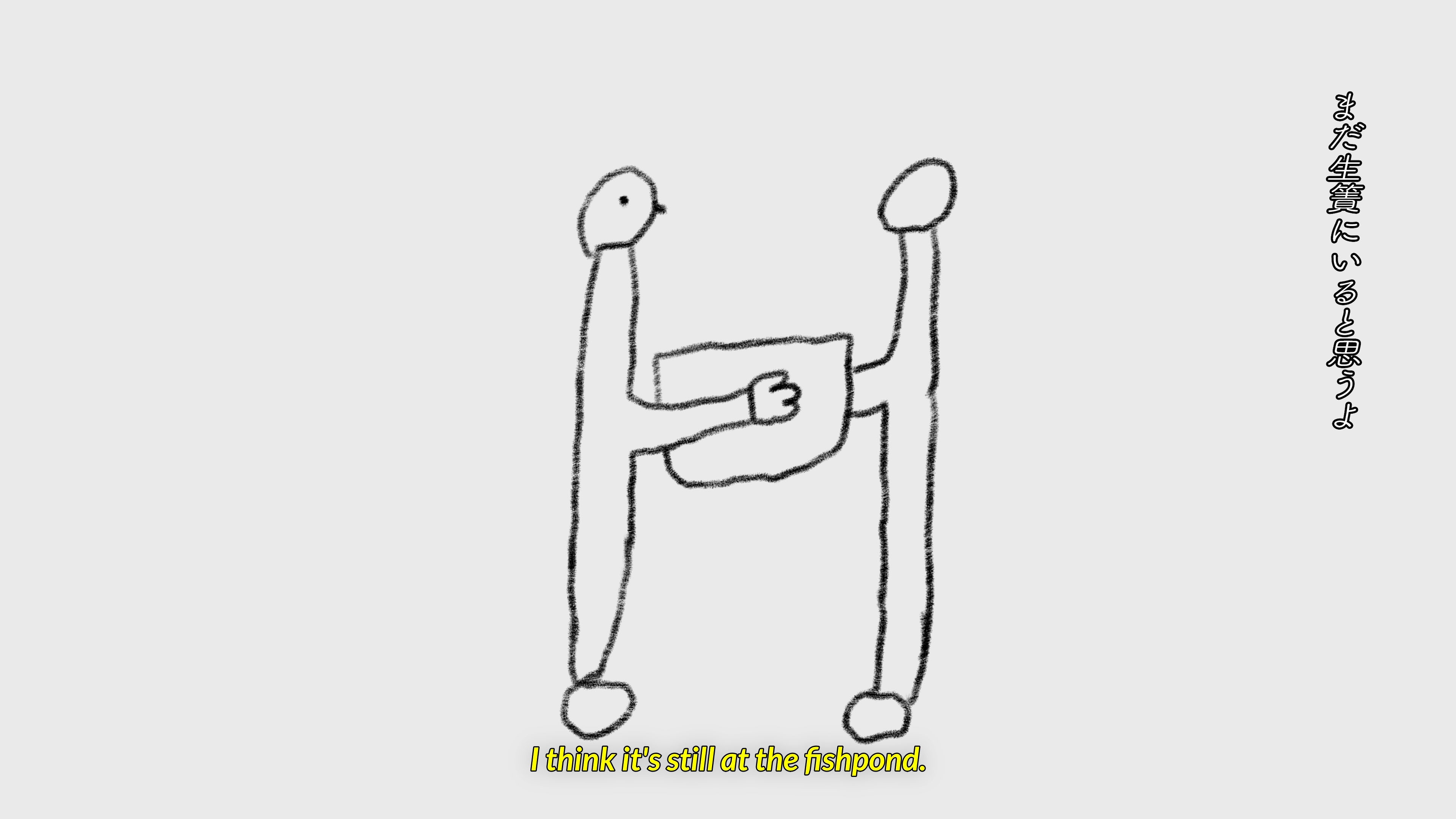
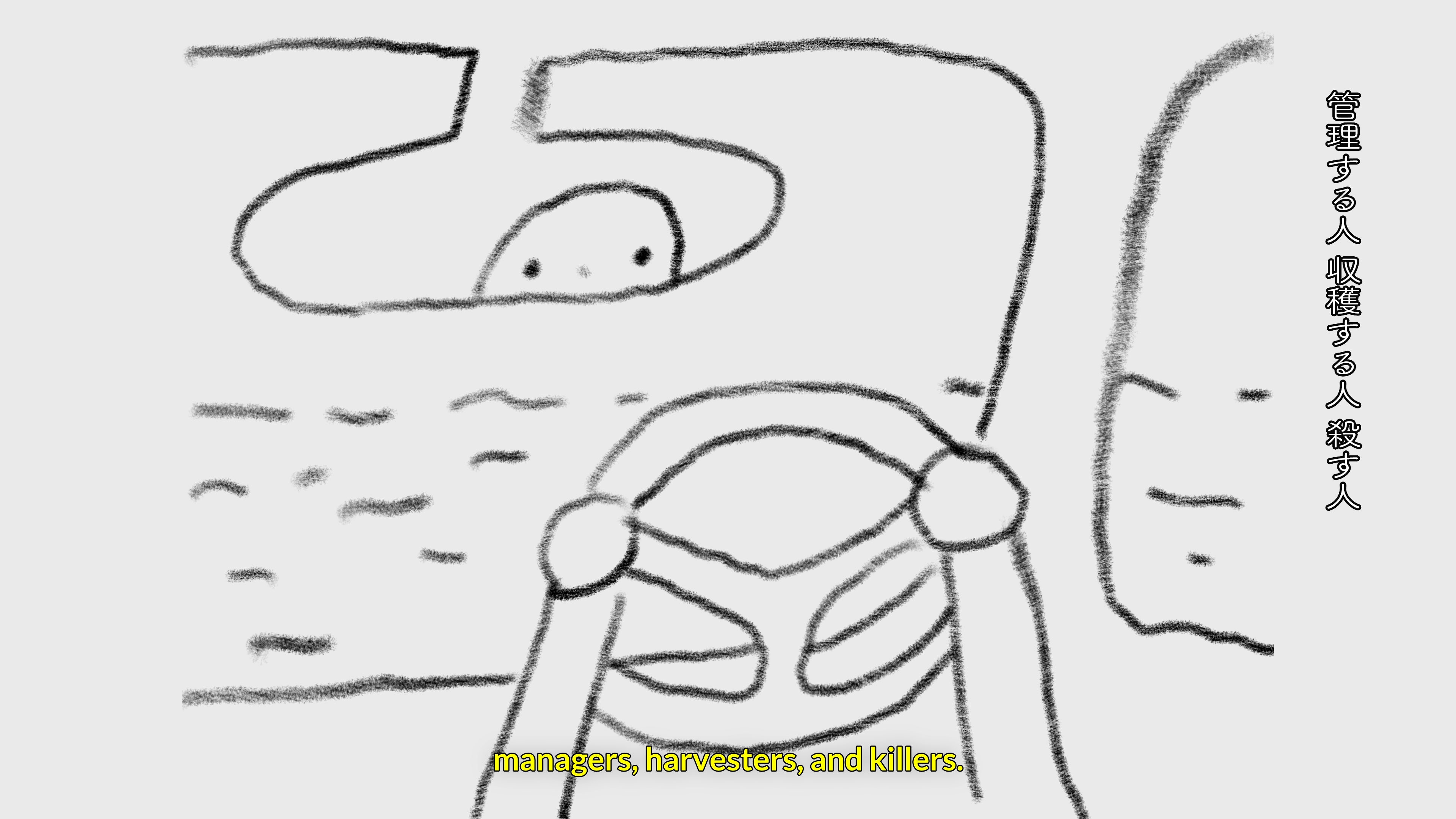
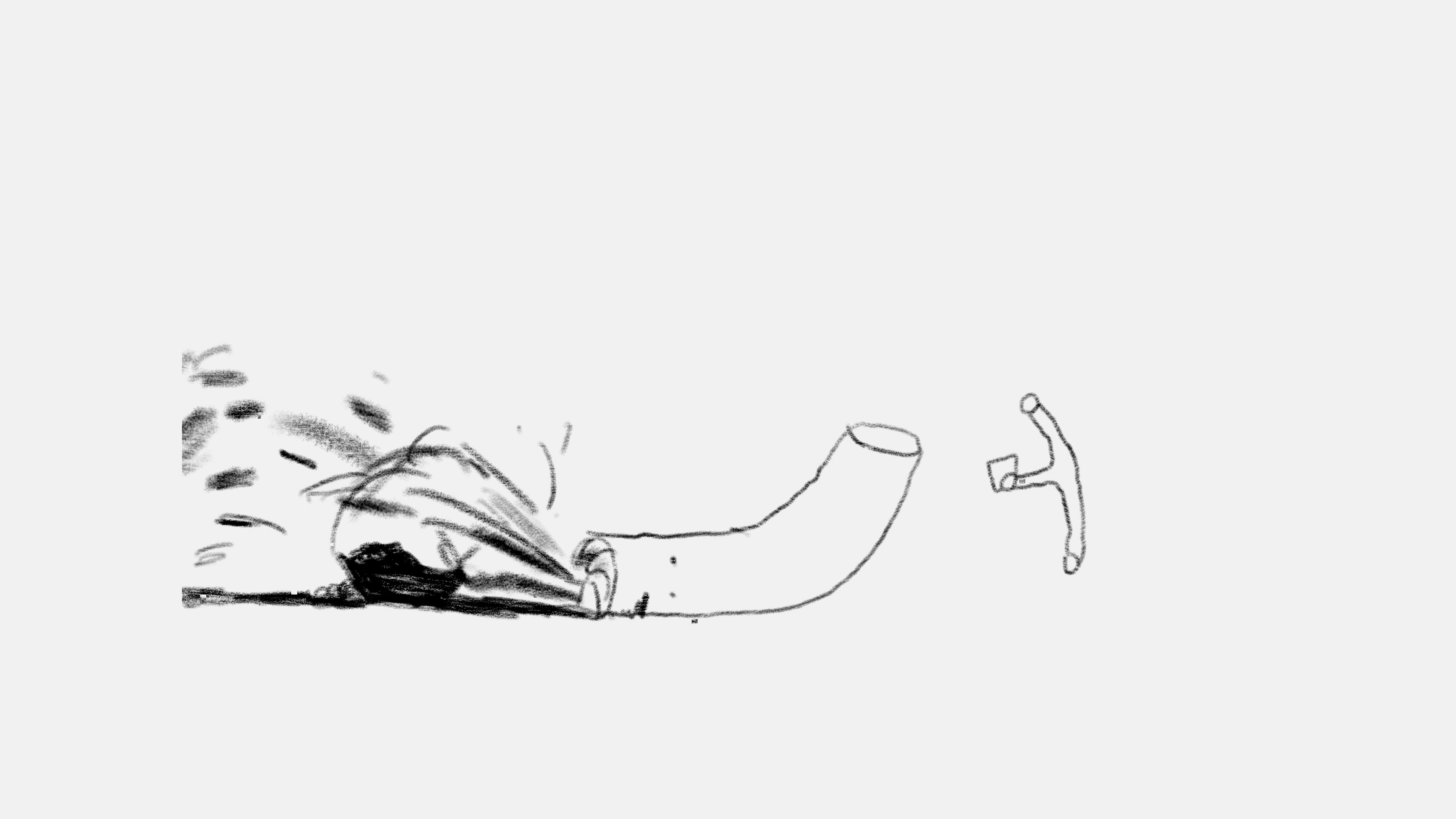
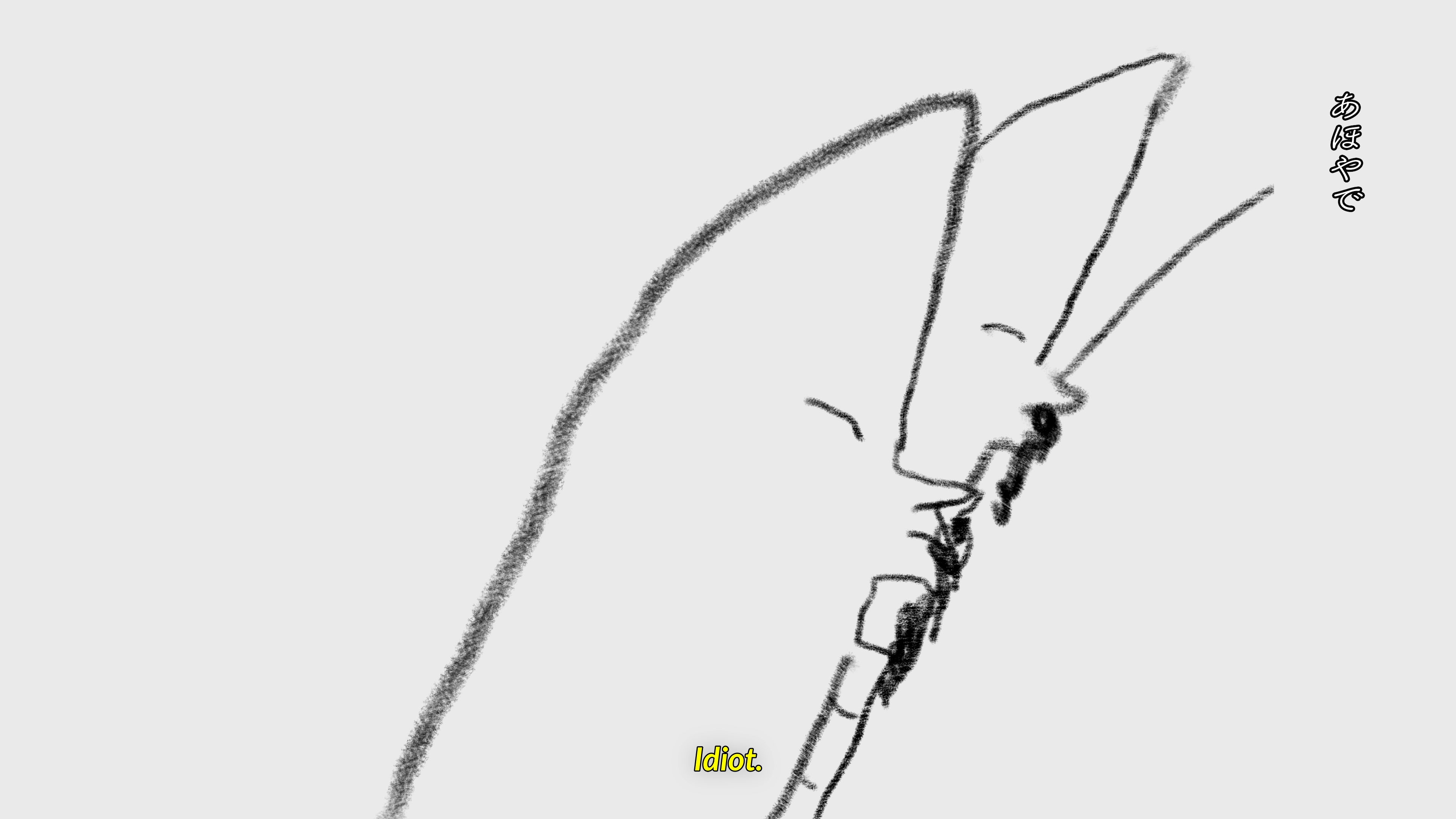
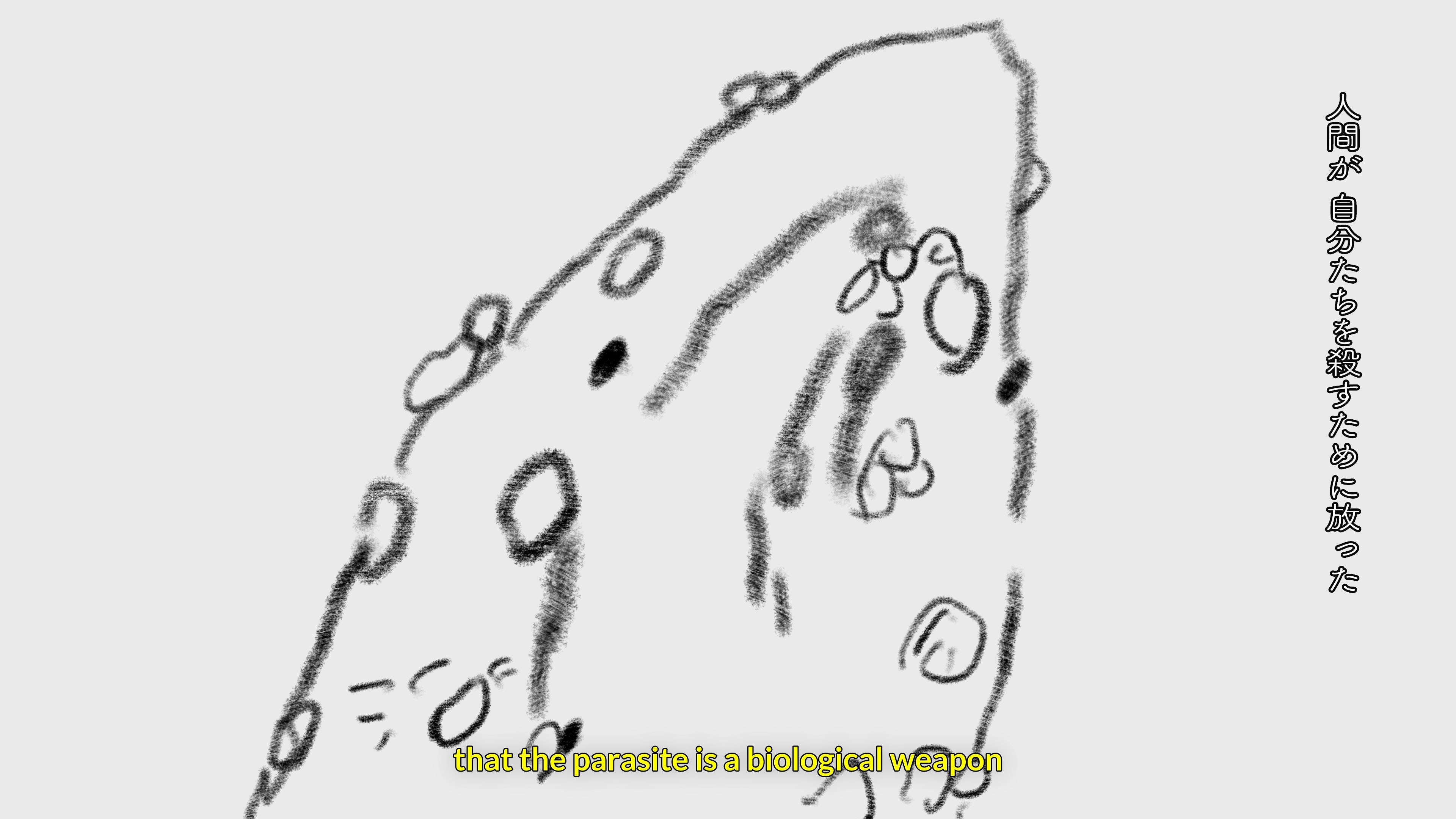
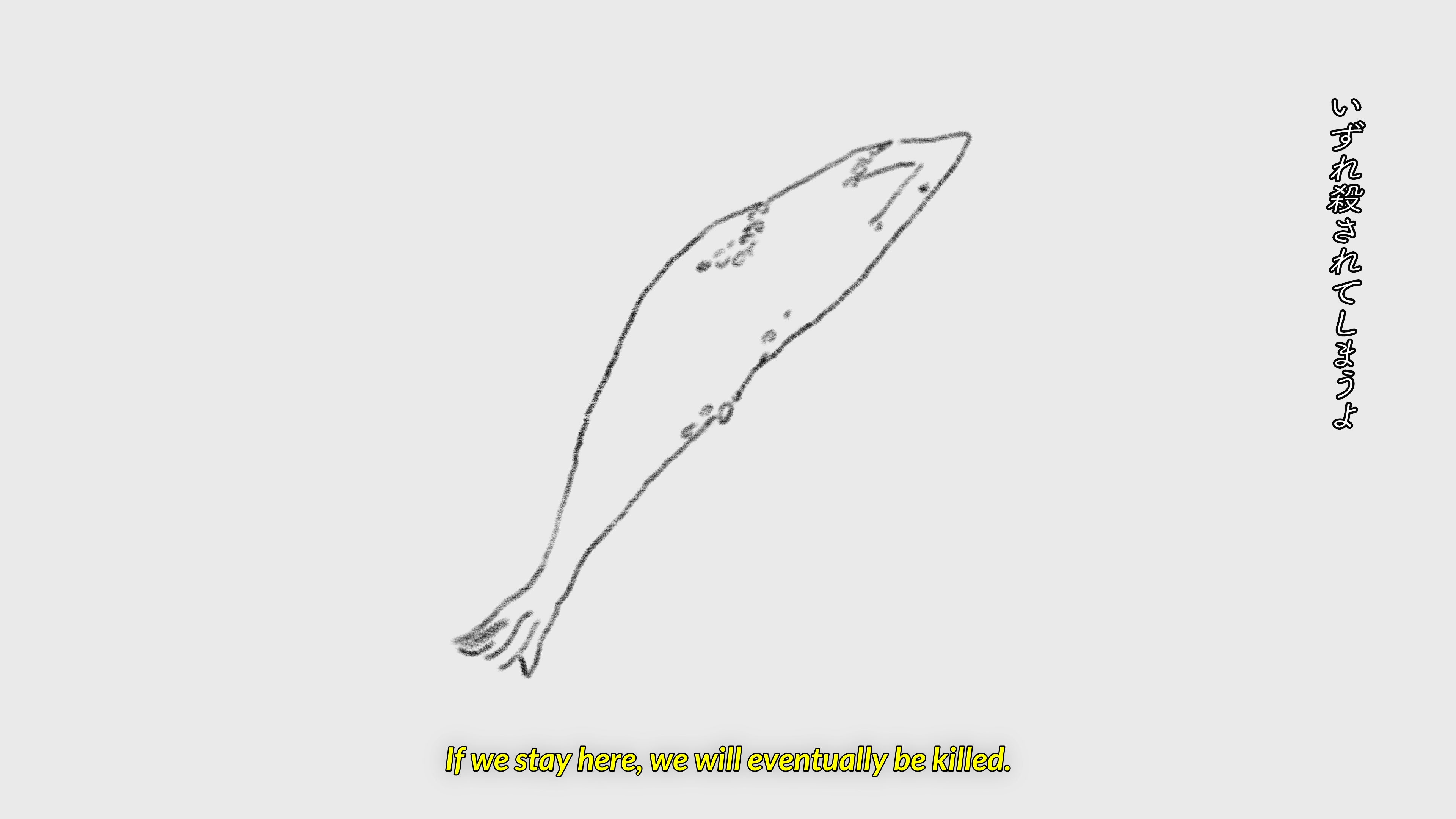
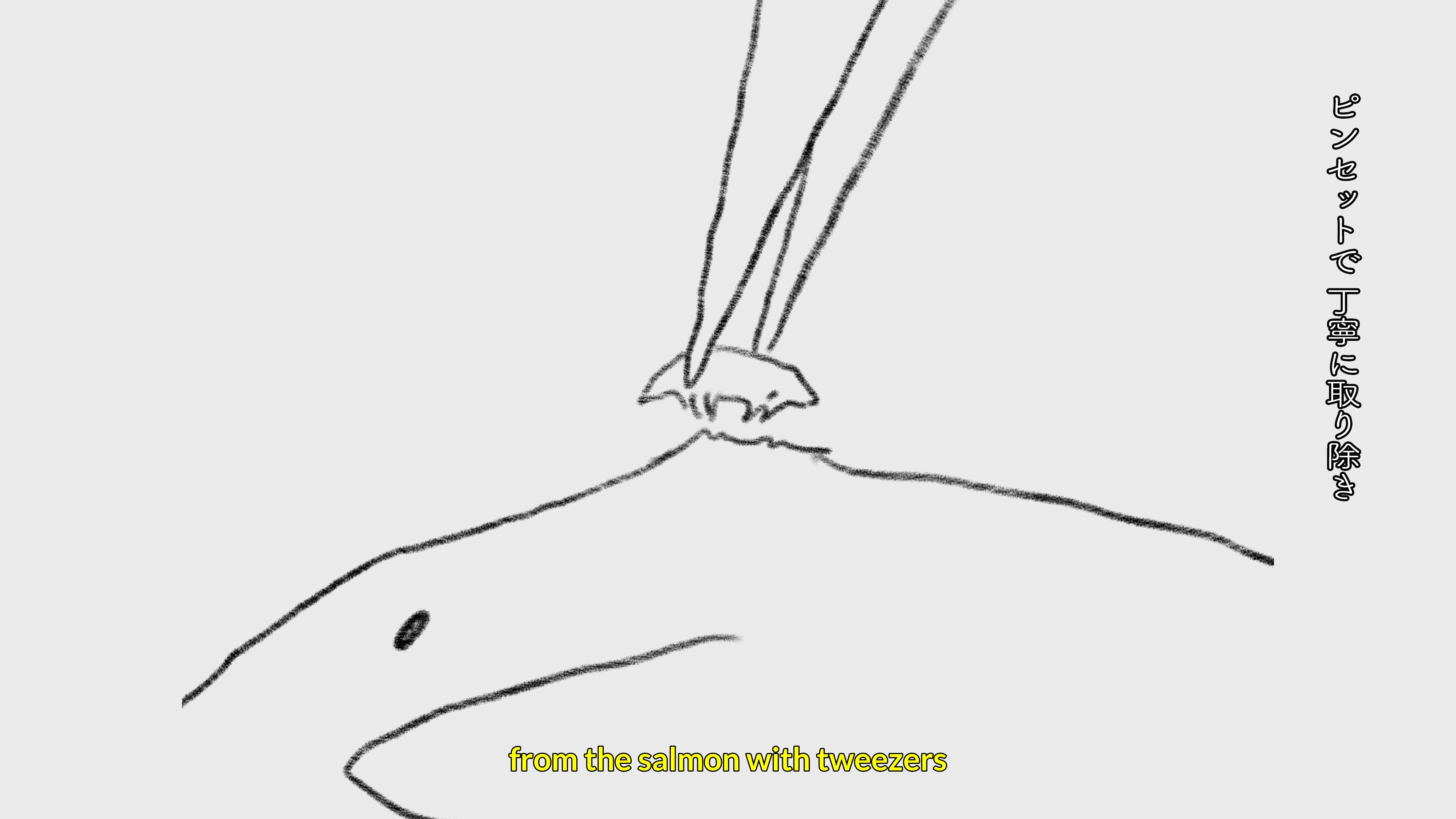

Stills from Becoming Salmon, 2024

Installation view at "Bacoming Feral", 2024 (Photo: Ryohei Tomita, Photo courtesy: Towada Art Center)
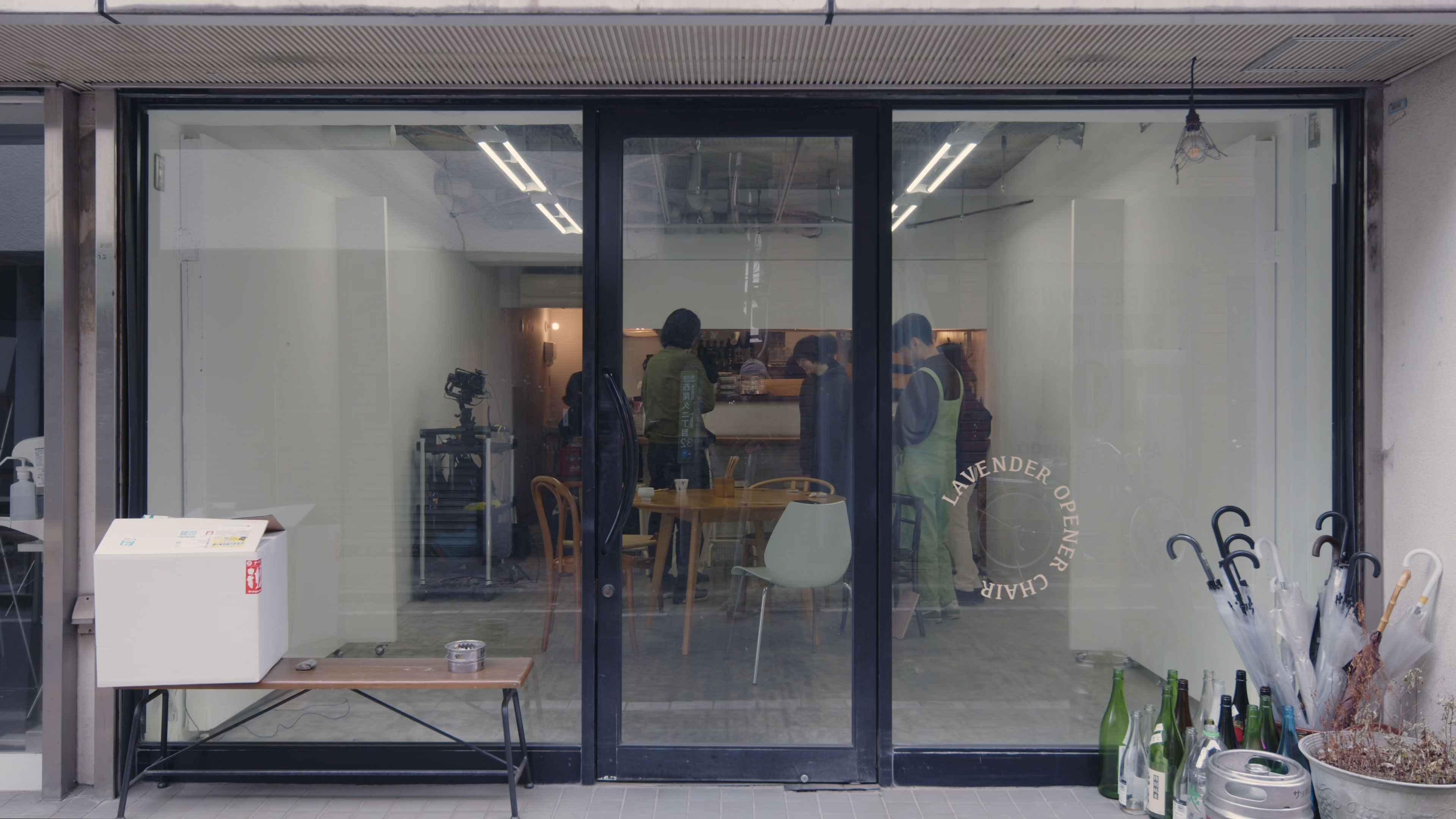
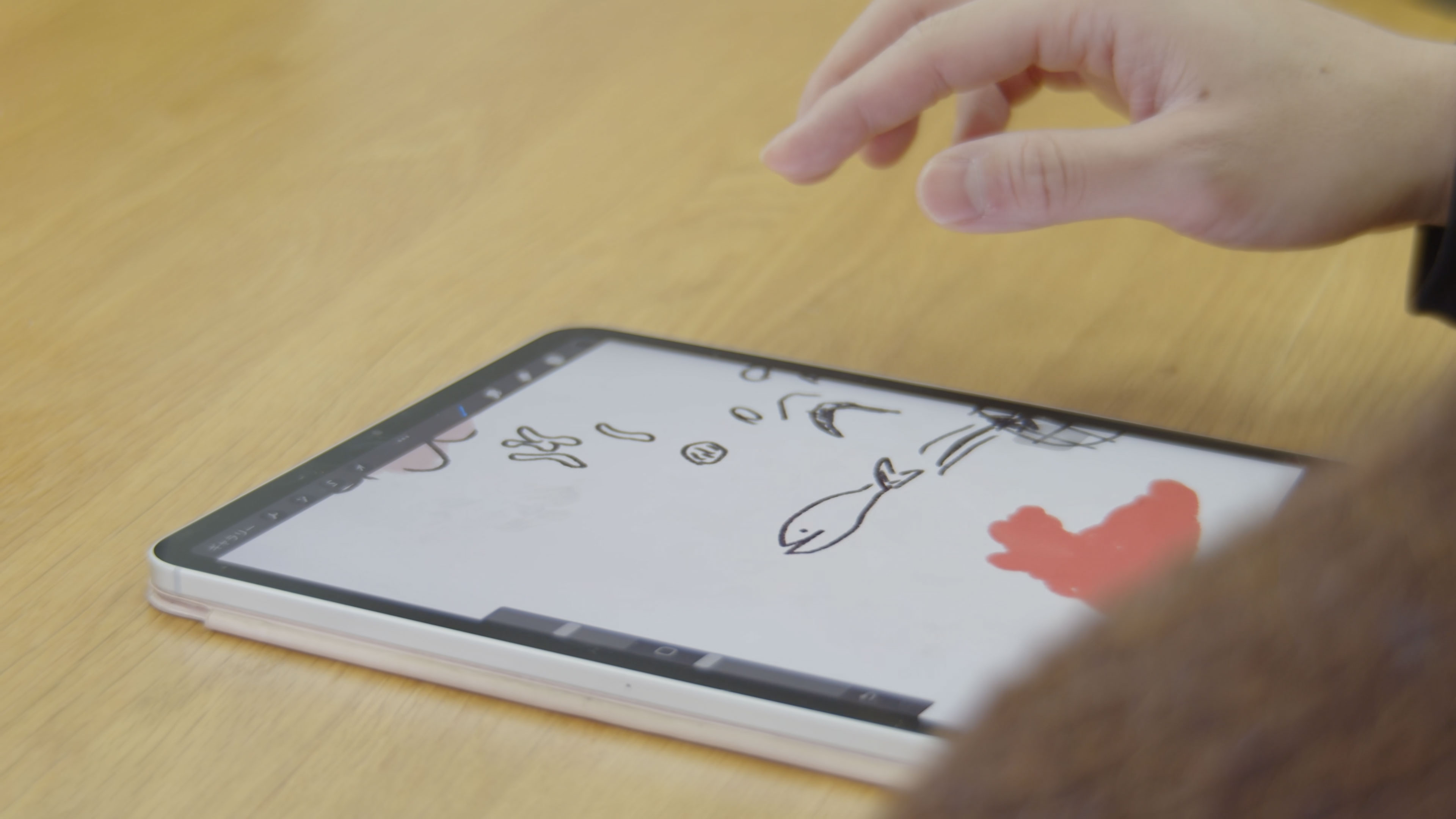
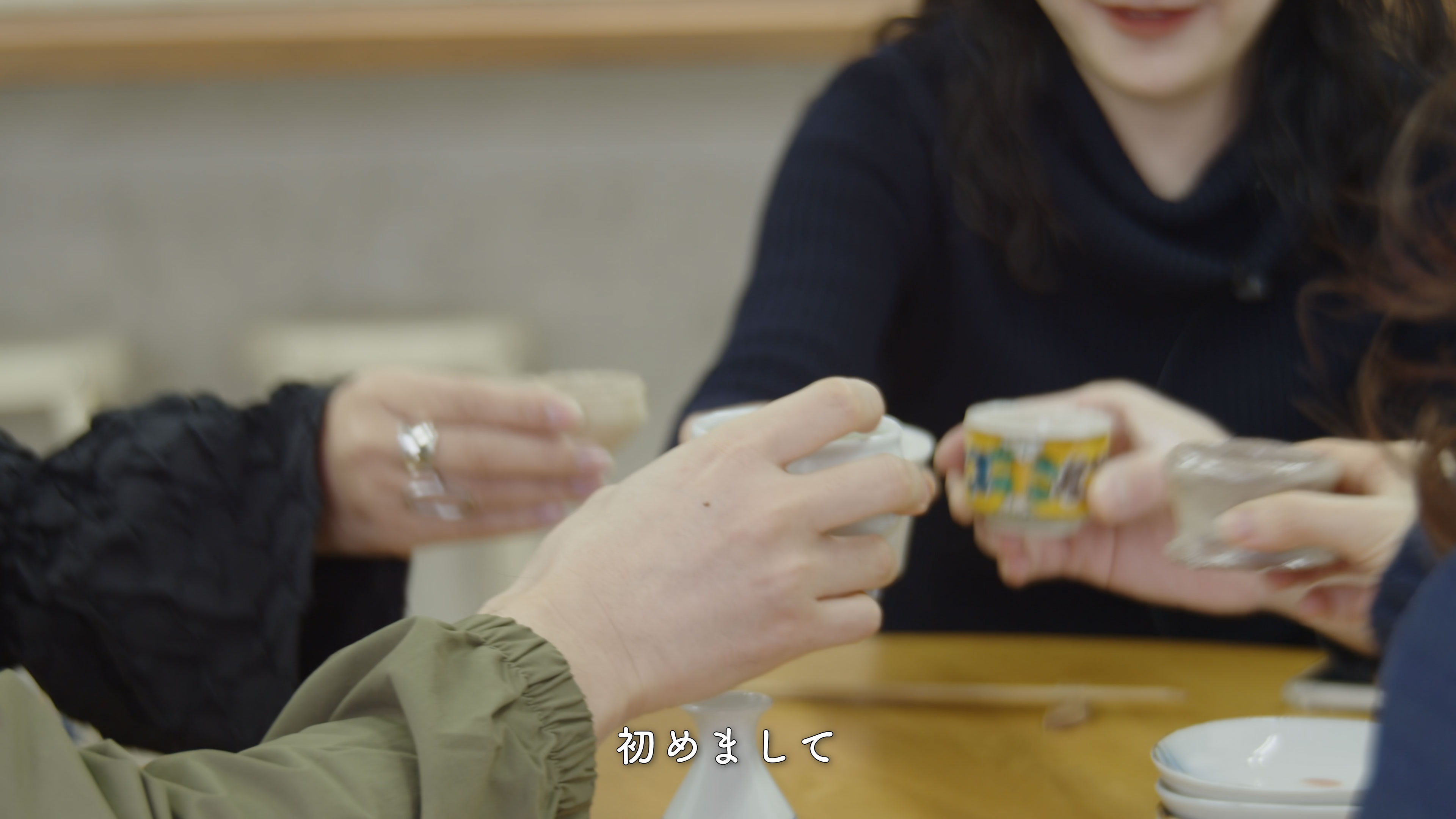
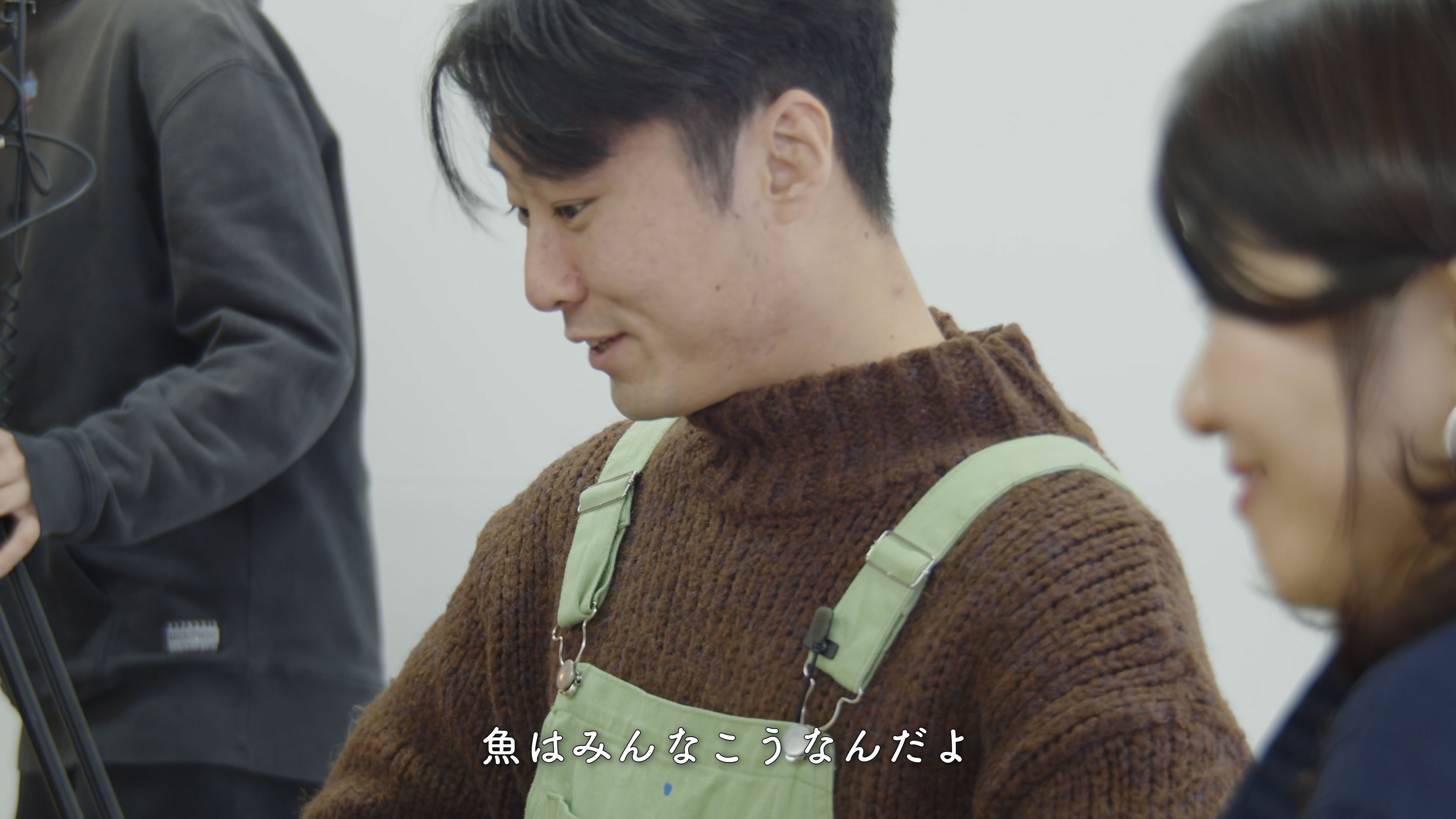
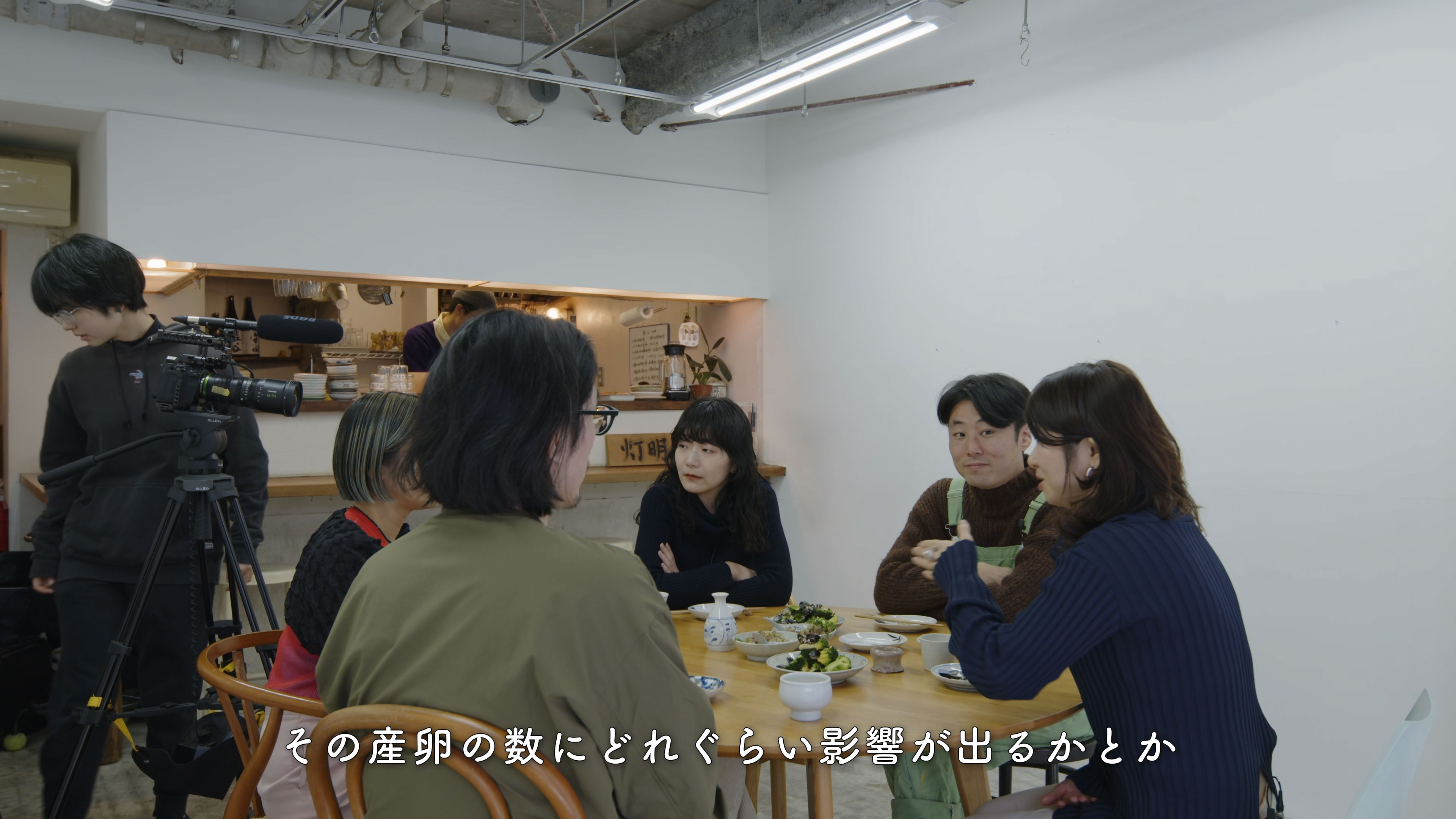


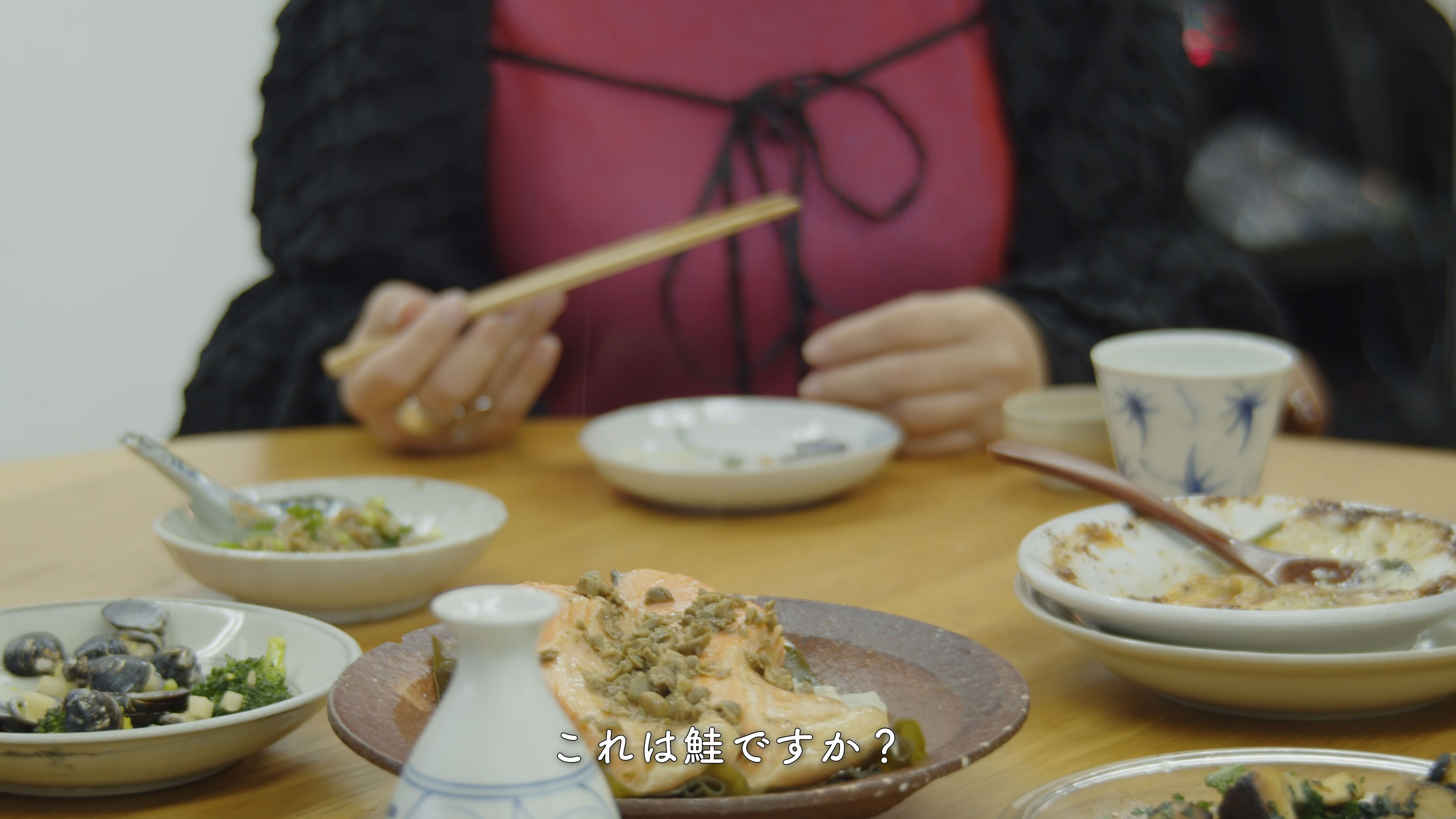

Stills from How to Become Salmon, 2020


Installation view at "Eat", 2020 (Photo: Yuki Moriya)
作者本人が料理をしている映像や食事風景の映像に重ねて、作者自身によるナレーションが付されているこの作品では、食事作法や調理技術における食材の加工と摂食者の身体の関係を中心にして、主体の単位についての考察が行われている。
17世紀にフランスの貴族のあいだで流行したピュレは、食材をあらかじめ奴隷や召使いたちにすり潰させることによって、咀嚼や消化といった動物的な営みにかかずらうことなしに食物を摂取できるという、いわば生理機能を外化する食事だった。タイトルにもあるように、作品はこのピュレを起点に展開する。ピュレは、その調理の手間から権力の誇示に用いられた歴史をもつと同時に、現代では幼児や高齢者といった咀嚼能力に問題を抱えた人々のケアの食事にもなっている。
作品のなかでは、テーブルナイフとフォークの普及が人間のかみ合わせに変化をもたらしたことや、そうした身体的な変形が西洋と東洋では別々に発生したことなど、食事作法と身体の関係に関する事実からはじまって、アメリカのオキュパイウォールストリートのデモにおける、デモ参加者の斉唱を用いた「ヒューマンマイクロフォン」の実践によって、「私たち」という主語が文字どおり集合的な口によってもたらされているといった、摂食し発話する口をめぐる主体性の問題へと語りが展開していく。
摂食する口は、さまざまな器具と関係することによって、その役割を変え、ときに物理的にも変化しうる。食べる行為に動員される器具や口は、その都度さまざまな関係を構築し、それによって都度食べる主体が構築されるのだ、と作品では示される。食事作法や料理の歴史を通じて、この作品は、そうした都度立ち上がる複合的で可塑的な主体のあり方を提示している。
The work, which is narrated by the artist himself overlaid with footage of him cooking and his guests eating, focuses on the relationship between the processing of ingredients and the body of the eater in eating manners and cooking techniques, and examines the unit of the subject.
The purée, which was popular among French aristocrats in the 17th century, was a meal that externalized physiological functions by having slaves and servants grind the ingredients in advance so that the food could be consumed without the need to engage in animal activities such as chewing and digestion. As the title suggests, the work develops from the starting point of this purée. Puree has a history of being used to show off power due to the time and effort required to prepare it, and at the same time, today it is used as a meal to care for people with chewing problems, such as infants and the elderly.
The work begins with facts about the relationship between eating etiquette and the body, such as the fact that the spread of table knives and forks brought about changes in human chewing, and that such physical deformations occurred separately in the West and the East. The narrative then develops into the issue of the subjectivity of the mouth that feeds and speaks, such as how the subject of "we" is literally brought about by the collective mouth through the practice of "human microphones" chanted by the protesters at the Occupy Wall Street demonstration in the United States.
The mouth that feeds changes its role, sometimes physically, by relating to various devices. The work shows that the utensils and mouths that are mobilized in the act of eating establish various relationships each time, thereby constructing the subject of eating each time. Through the history of eating etiquette and cooking, this work presents the complex and plastic nature of the subject that emerges each time.


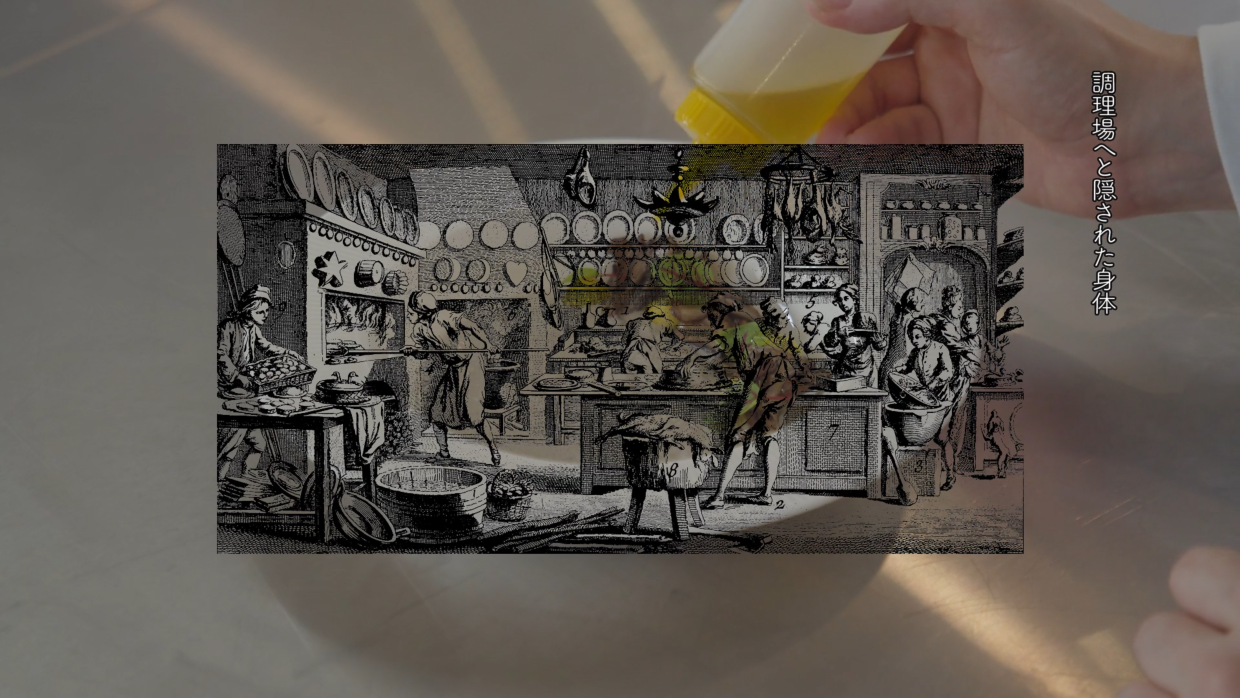


Stills from Purée, 2020
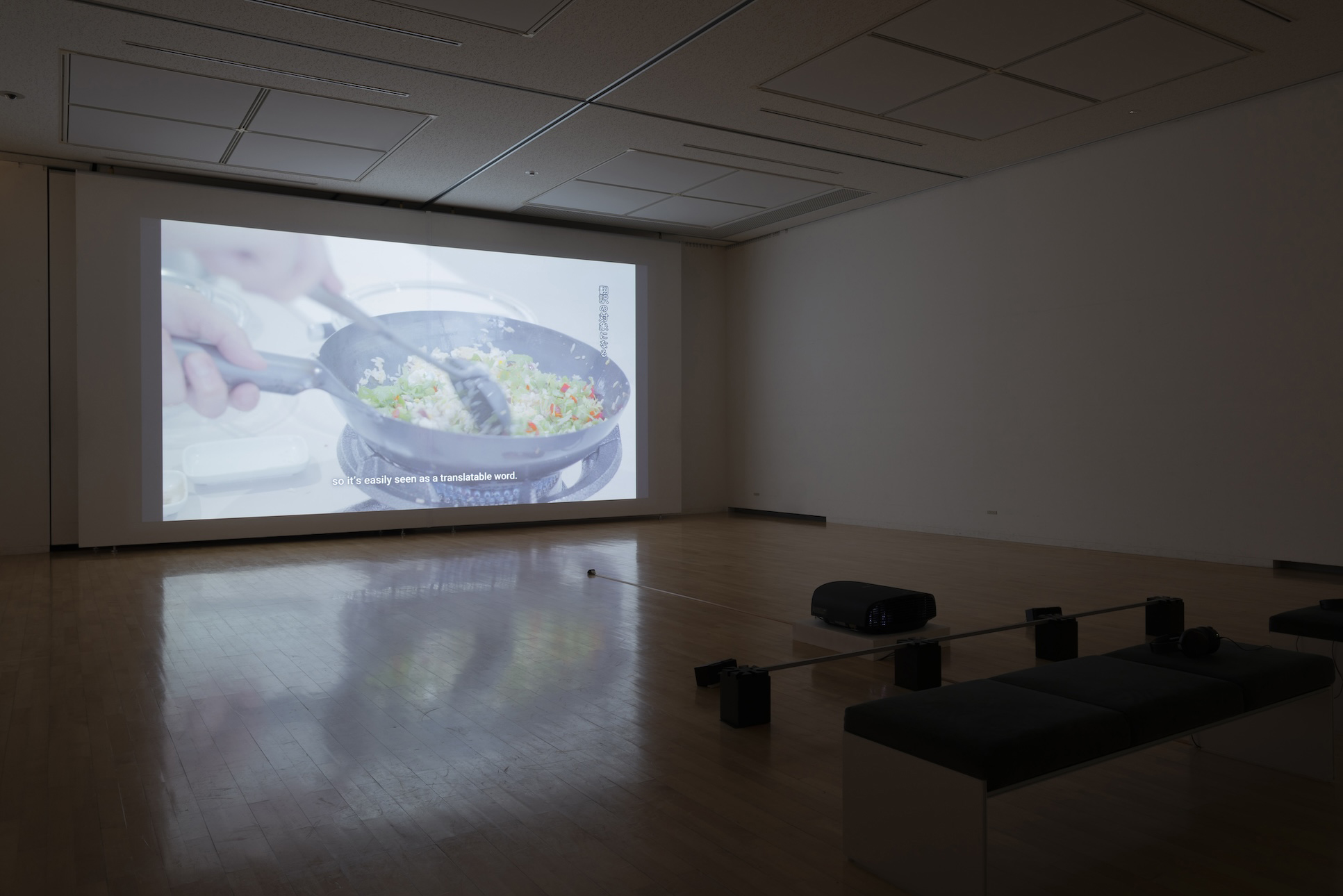

Installation view at "One and Several Narratives", 2023 (Photo: Ryo Adachi)
《Translation Zone》では、アーティスト自身が料理を行う映像に、アーティスト自身による日本語訛りの英語のナレーションが重ねられている。 このナレーションでは、分子調理学や人類学における文化の翻訳についてや、そうした文化の翻訳に伴う摩擦について、 様々な言語で表される"炒飯"や機械翻訳に伴う脆弱性などを例に語られる。本作は、シンガポールにおける多民族文化や、 日本における外国の文化のローカライズなどをとりあげ、多文化の混淆が、そもそも文化の創造のプロセスなのだと示している。
日本で揃う材料を使って他の国の料理を作ったり、ある言葉を別の言語へと翻訳する際には、必ずズレや摩擦が発生する。 本作では、このズレと摩擦に注目し、翻訳が失敗したり、相互に混ざり合ってしまうような状態に、文化の豊かさの源泉を見いだしている。
Translation Zone is a video essay in which the artist's own narration in English with a Japanese accent is superimposed over the video of himself cooking. The narration discusses cross-cultural translation in molecular gastronomy and anthropology, and the friction that accompanies such translation, using examples such as “fried rice” in various languages and the vulnerabilities associated with machine translation.
The film discusses the multi-ethnic cultures of Singapore and the localization of foreign cultures in Japan, and demonstrates how the mixing of multiple cultures is the process of cultural creation itself. When cooking food from other countries with ingredients available in Japan or translating one language into another, discrepancies and frictions are inevitable. This film focuses on this misalignment and friction, and identifies the source of cultural abundance in situations where translations fail or become intermingled.
For the 2023 solo exhibition "One and Several Narratives," a Japanese-language dubbed version of the work was produced and shown alongside a mobile library stocked with documents and books related to the piece. By broadening the issue of cultural translation that the work raises into a wider question of communication, the exhibition set out to turn the entire venue into a “Translation Zone.”


Stills from Translation Zone, 2019

Installation view at "One and Several Narratives", 2023 (Photo: Ryo Adachi)
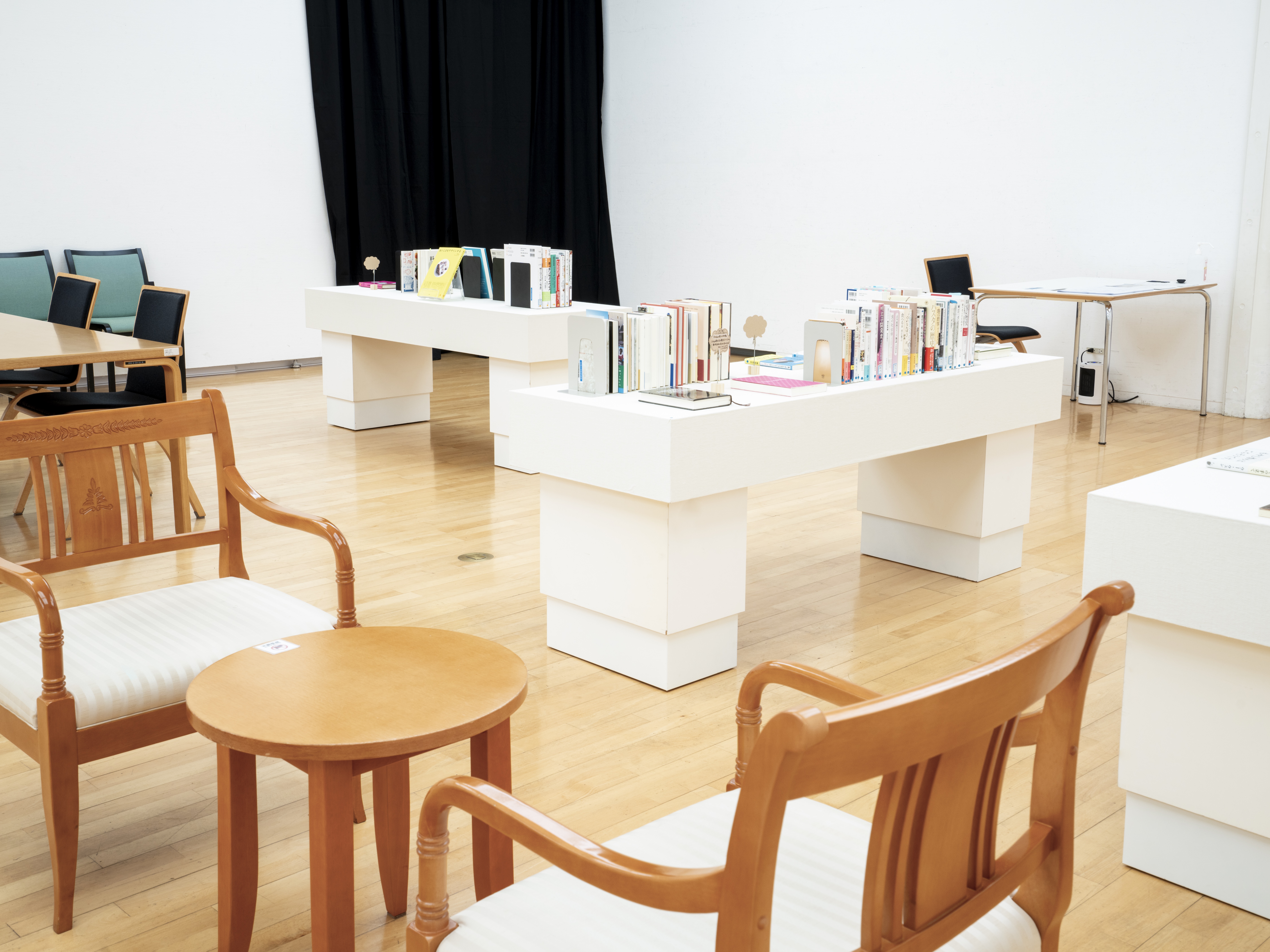
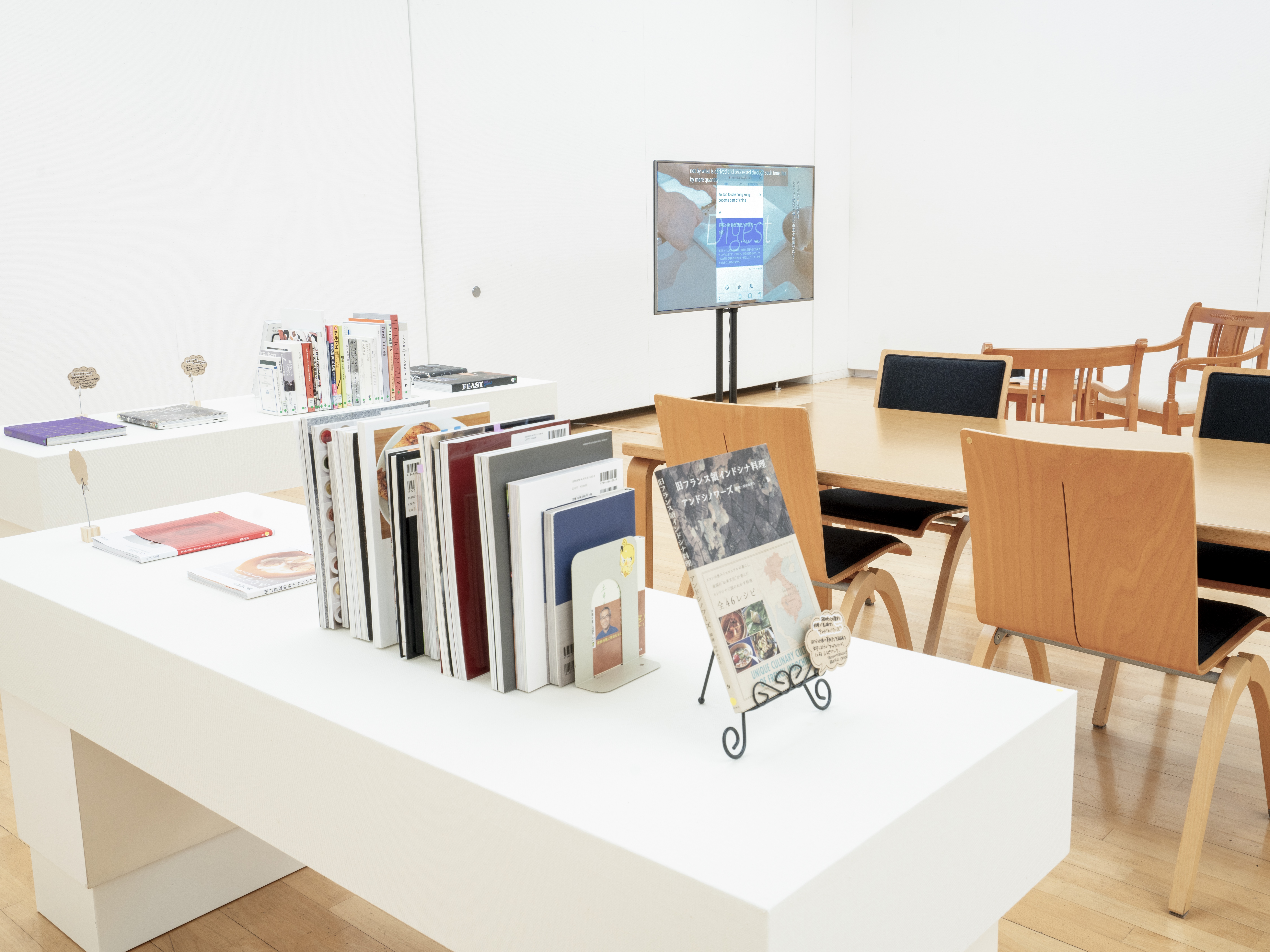
Installation view at "One and Several Narratives", 2023 (Photo: Ryo Adachi)
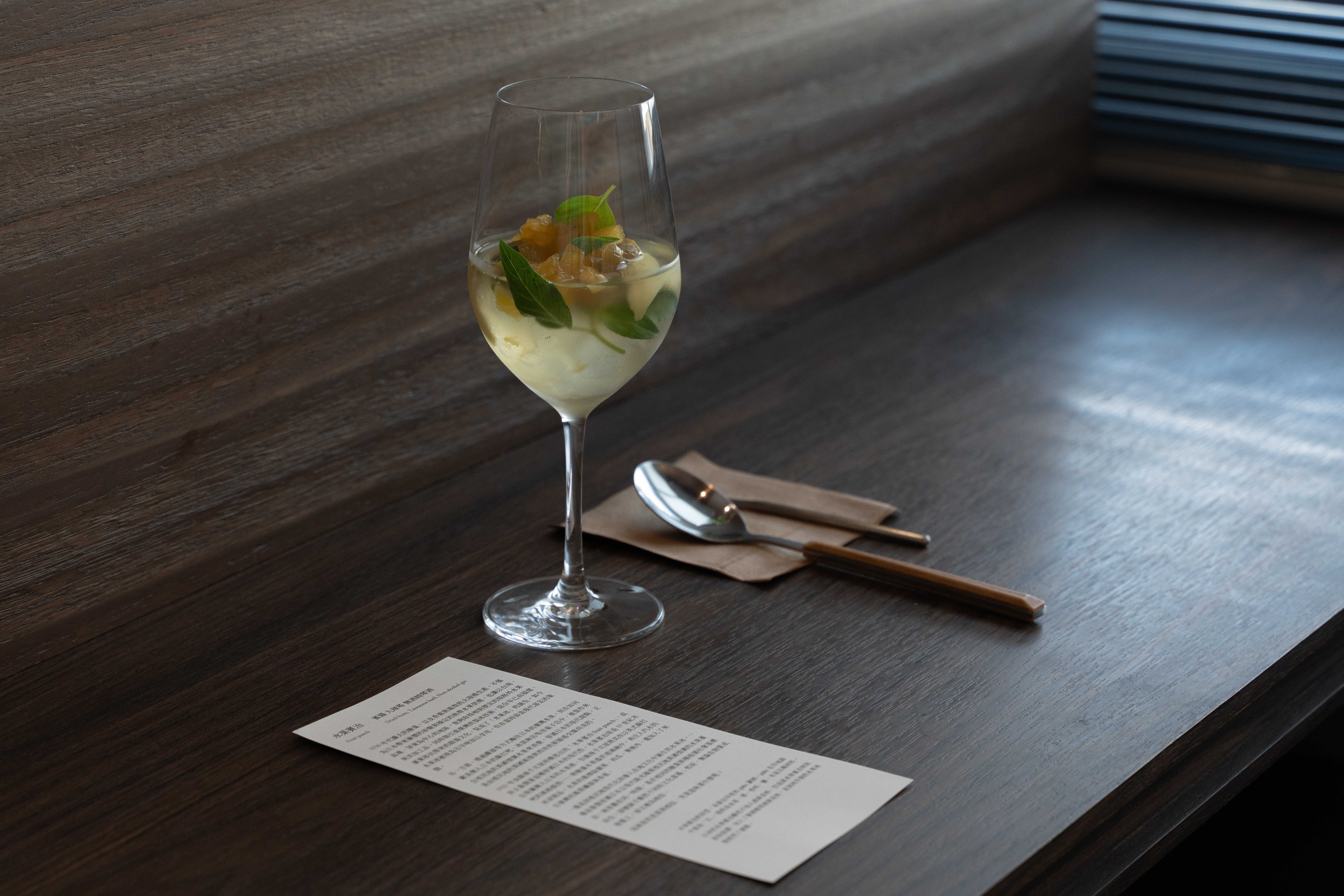
Installation view at "Taste in the Making"
「Taste in the Making」は、食を中心とする体験型のパフォーマンス作品である。 この作品では、台湾の農業および食文化における日本の植民地支配の影響についてのリサーチに基づいた一連のデザートが提供される。 各料理には、それぞれの料理の歴史的背景や調理法に関するテキストが付帯し、それによって、各々の料理の由来が味だけでなく、ナラティブを含めて鑑賞者に提示される。
日本による台湾の植民地化は、島の自然環境や文化的景観にさまざまな変化をもたらしたが、同時に台湾産品の移出によって日本の食文化にも影響を及ぼした。 植民地近代は台湾においていかに受容されたのか、また日本においていかなる文化的・政治的意味を帯びていたのか。 本作品では、これらの問いに基づき設計された4種の小さなデザートが提供される。参加者はそれらを味わうことを通じて、食をめぐる歴史的・政治的な物語と向き合うことになるだろう。
Taste in the Making is a food-centered, experiential artwork in which the artist serves a series of desserts based on his research on the impact of Japanese colonial rule on Taiwan’s agriculture and food culture. Each dish is accompanied by text detailing its historical and technical background, presenting the origins of each dish to guests not only through its taste but also through its narrative.
While Japan’s colonization of Taiwan brought about various changes to the island’s natural environment and cultural landscape, it also influenced Japanese food culture through the introduction of Taiwanese products. How was colonial modernity received in Taiwan, and what kinds of cultural and political meanings did Taiwanese products carry in Japan? The work presents four small desserts, each designed around these questions. Through tasting them, participants engage with historical and political narratives surrounding food.
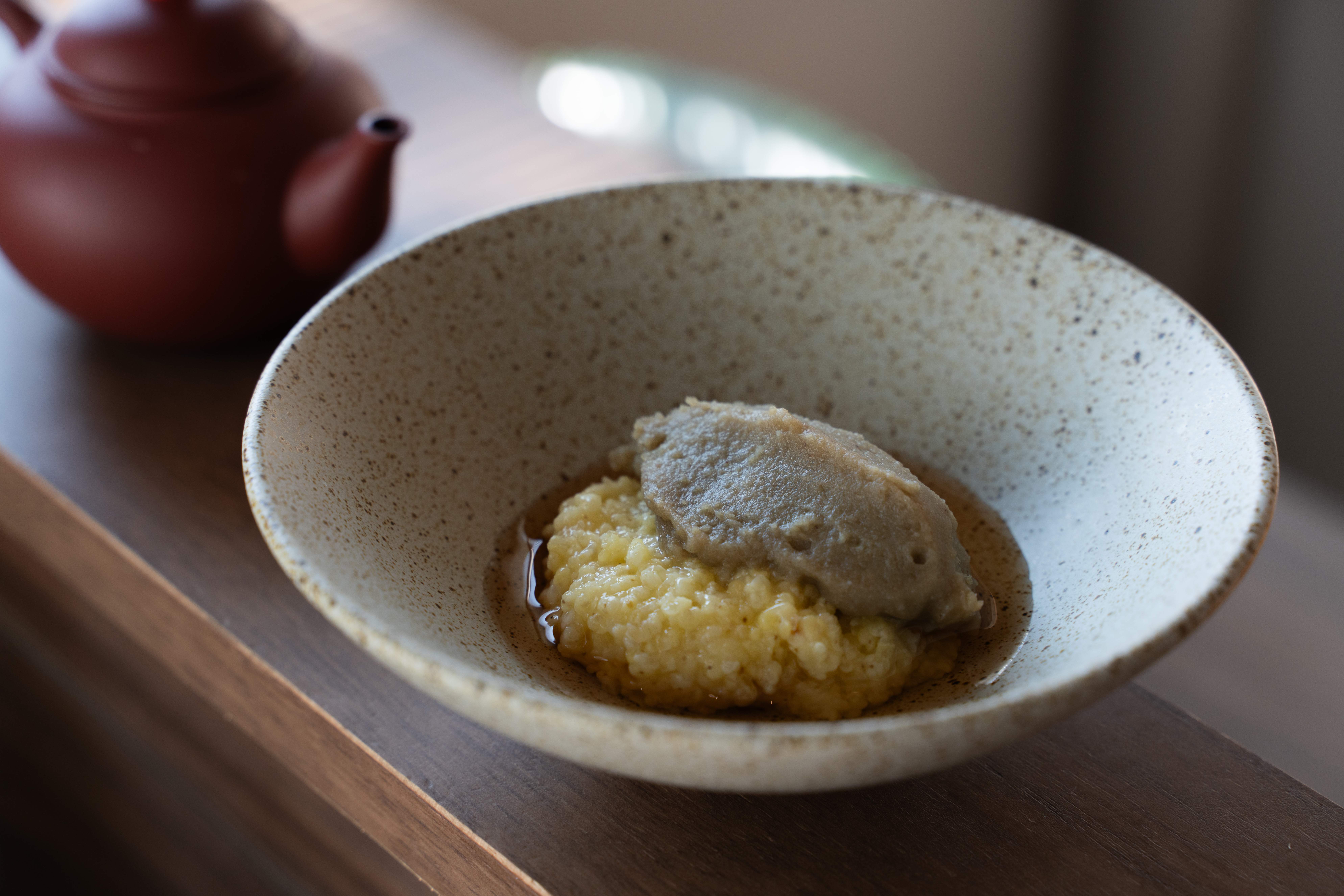
Installation view at "Taste in the Making"

Installation view at "Taste in the Making"


Installation view at "Feasting Wild", 2022 (Photo: Yuji Oku)
《Feasting Wild》は、「手つかずの自然」「家畜」「他者としての自然」「野良になる」「条件付きの野性」「荒れ地より」の6つのセクションからなるフルコースの料理提供を伴うパフォーマンス作品で、合計10皿の料理と5杯のペアリングドリンクによって構成される。この作品は、タイトルにあるように「野生であるとはどういうことか?」「手つかずの自然とはなにか?」といった問いを出発点にして、狩猟・採集、畜産、養殖・栽培漁業といったトピックについてリサーチをもとに制作されている。食品生産や調理の現場における微生物を含む動植物の生命の管理は、人間と非人間のエージェンシーが互いに絡まり合い、人為と自然が分別不可能になるような異種混淆的な場を生み出している。この作品では、近代的概念としての自然と文化の対立に還元できない、「野生」のありかたが重要な関心になっている。
各セクションでは、そのテーマに関する書籍の引用が記されたシートが来場者に手渡され、続いて食材・料理のキャプションを記したお品書きと料理が順番に提供される。提供される料理では、リサーチ対象であったり、その過程で発見された食材が用いられ、キャプションシートにその食材や調理法についてのストーリーが記されている。来場者はシートに記されたテーマやストーリーを言語的に理解すると同時に、それに関連した食材や調理法で作られた料理を食べることで、作品を概念的かつ体感的に経験することになる。
Feasting Wild consisted of six sections: " Untouched Nature," " Domestication," "Nature as Other," "Becoming Feral," "Conditioned Wildness," and "From the Wasteland," with a total of 10 dishes and 5 paired drinks. In each section, audiences are handed a sheet with quotations from books on the theme, followed by a menu with captions of the ingredients and dishes, and the dishes are served in turn.
The work is research-based on the topics of hunting and gathering, animal domestication, and aquaculture and fisheries, and its starting point is the question, "what does it mean for an animal to be wild?" The control of animal and plant life, including microorganisms, in food production creates a heterogeneous field where human and non-human agency are entangled with each other and where the artificial and the natural become indistinguishable. In this work, it is the state of the "wild," which cannot be reduced to the opposition between nature and culture as a modern concept, that is the key concern.
Each dish features ingredients that were researched or discovered in the process of research, and the caption sheets tell the story of the ingredients and cooking methods used to prepare them. By not only verbally understanding the themes and stories on the sheets, but also by eating dishes prepared with related ingredients and cooking methods, visitors experience the work both conceptually and physically.

Dish from Feasting Wild, 2022 (Photo: Yuji Oku)

Dish from Feasting Wild, 2022 (Photo: Yuji Oku)


Menu sheet from Feasting Wild, 2022 (Photo: Yuji Oku)


Menu sheet from Feasting Wild, 2022 (Photo: Yuji Oku)


Dish from Feasting Wild, 2022 (Photo: Yuji Oku)


Installation view at "Eating Body", 2021 (Photo: Takuya Igarashi)
《Eating Body》は、9品からなる料理とそれぞれに付随するテキストから構成されており、タイトルにあるように「食べる身体」がテーマとなっている。テキストには料理書や思想家によるエッセイ、中世の風刺小説などからの引用が記されており、そこでは身体が食事作法やカトラリーなどの器具によって形作られていることや、それに付随した権力や差別が指摘されている。そうした「食べる身体」の可塑性や、それをめぐる社会政治的関係性への言及に連動するように、それぞれの料理では手食やスプーン、ナイフ・フォーク、箸のように様々な器具が鑑賞者に提供され、料理の食べ方が給仕人から提案される。
鑑賞者は、前半ではほとんど噛む必要がないほどに調理されたひと口大の前菜を味わうことで、ほとんど肉体的な運動を伴わず(それゆえほとんど受動的に)に食事を完了することができる。しかし、コースの中盤でカトラリーが必要な料理が給仕されると、鑑賞者はナイフやフォークを用いて食材を食べられるサイズに刻んだり、皿上の要素を自ら組み合わせて食べることになる。加えて、料理とともに提示されるテキストでは、こうしたカトラリーによる事前の「噛み砕き」が、人体の骨格をも変容させているという事実が示される。
本作品では、このようなコース料理のシークエンスやそれに伴うテキストによって、身体が制度や規律によって組み替えられているという事実や、ときにそうした行為が調理場という不可視の領域で行われていることをはじめとした、身体をめぐるポリティクスが鑑賞者へと体感的に提示されている。
Eating Body consists of nine dishes and accompanying texts, and as the title suggests, the theme is "bodies that eat". The texts include quotations from cookbooks, essays by thinkers, and satirical novels from the Middle Ages that suggest that the body is shaped by eating habits and utensils such as cutlery, as well as the power and discrimination associated with them. In conjunction with such references to the plasticity of the "eating body" and the socio-political relations surrounding it, various utensils such as hand-held food, spoons, knives and forks, and chopsticks are provided to the guest for each dish, and the waiter suggests how to eat the food.
In the first half of the course, the guest can complete the meal with little physical effort (almost passively) by enjoying the bite-sized appetizers that are cooked so well that they require little chewing. When, on the other hand, a cutlery-intensive dish is served in the middle of the course, the diner needs to use a knife and fork to cut the food into edible pieces and combine the elements on the plate. In addition, the text presented with the food shows that this preliminary "chewing" with cutlery also transforms the human skeleton.
In this work, the sequence of the meal and the accompanying text present the viewer with a sense of the politics of the body, such as the fact that the body is reconfigured by systems and disciplines, and that such actions sometimes take place in the invisible realm of the kitchen.

Installation view at "Eating Body", 2021 (Photo: Takuya Igarashi)

Installation view at "Eating Body", 2021 (Photo: Takuya Igarashi)

Dish from Eating Body, 2021 (Photo: Takuya Igarashi)

Dish from Eating Body, 2021 (Photo: Takuya Igarashi)


Dish from Eating Body, 2021 (Photo: Takuya Igarashi)

Installation view at “Open Space 2018”, 2018 (Photo: Keizo Kioku, Photo courtesy: NTT InterCommunication Center)
この作品は、Photoshopという画像編集ソフトウェアのスポット修復ブラシツールという機能を用いて制作されている。この機能は、通常、撮影時に混入したゴミや、意図せず写り込んでしまった要素を除去するために用いられる。
スポット修復ブラシツールは、2010年にリリースされたPhotoshopCS5 で初めて実装された機能であり、ユーザーによって選択された領域の周囲の画像を解析し、画像内の類似の箇所からテクスチャを抽出してパターンを生成することによって、その領域を違和感なく塗りつぶすことができます。
この作品では、写真を表示したデジタルデバイスと、そこで被写体となっている物体を同時に撮影した写真に対して、このツールが用いられています。このような写真では、実物とその写真画像が同じ画面上に配置されているために、画面上でのテクスチャが似通っていても、それらが置かれている状況が必ずしも一致するとは限りません。あるものは現実の空間に置かれており、また別のものは写真が表している空間のなかに置かれているということが起こるのです。しかし、コンピュータは、画像を単なる画素の集合として処理するため、個々の要素が実物なのか、それとも写真に表示されたものなのかといった、カテゴリーにかんする判断をすることができません。そのため、現実の空間に置かれているもののテクスチャを生成する際に、写真が表している空間の中にある物体のテクスチャを利用したり、もしくは逆に、写真が表している空間の中にあるもののテクスチャ生成に、現実の空間に置かれている物体のテクスチャを利用したりすることもありうるのです。
このようなツールの特徴によって、この作品では、写真が表している複数の空間と、それが置かれている現実の空間が、ツールのアルゴリズムによって等価に扱われ、それぞれが相互に貫入し合うような空間が形成されています。
──《オーディオ・ガイド》(2019)より
The works were created using a feature called the Spot Healing Brush tool in Photoshop, an image-editing software. This function is usually used to remove dust captured during shooting or elements that were unintentionally captured.
The Spot Healing Brush tool, first implemented in Photoshop CS5 which is released in 2010, fills a selected area naturally by analyzing the image around the area and extracting textures from similar areas in the image to generate a pattern.
In these works, this tool is used for the photograph which captures several objects and digital devices that display the picture of these objects at the same time. In such photographs, the real objects and the photographic images are placed on the same picture, so even if the textures of these objects are similar, the space in which they are placed may be different; some may be in real space, others in the space that the photograph represents. However, because computers treat images as a mere collection of pixels, they cannot make categorical decisions which means that they cannot distinguish real objects from the objects displayed in photographs. Therefore, the texture of a real object may be used to generate a texture of an object represented in a photograph, or conversely, the texture of an object in the photograph may be used to generate a texture of an object in the real space. In these works, the algorithm of the tool with properties as such treats the multiple spaces that the photographs represent and the real space in which photographs are placed equally, thereby forming a space in which all space interpenetrates.
── Excerpt from Audio Guide, 2019

Function Composition, 2019

Function Composition, 2019

Function Composition, 2019

Installation view at “Aichi Triennial 2019”, 2019
この作品のテキストや色面分割は、人工知能による物体検出をもとに制作されている。作品で用いられている物体検出のアルゴリズムは自動車の自動運転などで利用されているものと同種のものである。
一連の作品は、同じ状況を異なる視点で撮影したものを含む、いくつかの写真やインターネットからのキャプチャ画像などによって構成されています。これらの画像には、物体検出アルゴリズムによる被写体の塗り分けに加えて、検出された物体を列挙したテキストが付されていますが、別の角度から見た同じ状況の画像でも異なる認識に基づくテキストになっていたり、異なる状況の画像であってもまったく同じテキストになっていたりしています。このような結果は、アルゴリズムの仕組みによるものです。
物体検出のアルゴリズムは、予め人間が用意した膨大な画像とそこに写っている物体にかんするデータから、画像に何が写っているかということを統計的に判断していますが、画像に表示されている風景がどのような状況にあるのかといった文脈に関する判断は行われていません。そのため、物体の検出は、予め与えられているデータに大きく依存しているのです。実際のところ、画像に何が写っているかといった判断は、文脈に大きく左右されるでしょう。
例えば、ある画像を「デスクの画像である」とするか「本、ノート、ペン、そしてコーヒーカップの画像である」とするかは、判断する人が置かれている状況によっていかようにも変わりえます。アルゴリズムは、本質的に状況に依存している判断を、与えられたデータという単一的な指標に基づいて、行っているのです。作品に付されたテキストから感じる違和感は、こうした物体検出のアルゴリズムと人間による判断の違いによって引き起こされているということができるでしょう。
──《オーディオ・ガイド》(2019)より
The colorings and texts on these works are based on the object detection with neural network. The object detection algorithm used in these works is the same type as that used in self-driving car.
A series of works consists of several photographs, images captured from the Internet, and so on, including different views of the same situation. These images come with texts that list the detected objects in addition to the coloring by the object detection algorithm. However, images in the same situation viewed from different angles may be recognized differently showing different texts, or images in different situations may have exactly the same text. These results depend on how the algorithm works.
The object detection algorithm statistically determines what is shown in images based on a huge number of images and data about objects in the images prepared by humans, but it does not take account of the context of the scene displayed in the image. Therefore, the detection of the object depends largely on the given data to the algorithm. In fact, determining what an image shows is very contextual. For example, deciding whether an image is "a picture of a desk." or "a picture of books, a notebook, a pen and a coffee cup" can vary depending on what kind of situation the person making the decision is in. Although the algorithm makes decisions based on a single criterion of given data, these decisions can vary inherently depending on the situation. It can be said that this weirdness of the texts on the works are caused by the difference between the object detection algorithm and human judgment.
── Excerpt from Audio Guide, 2019

Semantic Segmentation, 2019

Semantic Segmentation, 2019

Installation view at “False Spaces”, 2019 (Photo: Kenji Takahashi, Photo courtesy: Tokyo Arts and Space)

Installation view at “False Spaces”, 2019 (Photo: Kenji Takahashi, Photo courtesy: Tokyo Arts and Space)


Semantic Segmentation, 2019

Installation view at “Seeing as though touching”, 2022 (Photo: Sayuki Inoue, Photo courtesy: Tokyo Photographic Art Museum)
この作品は、Photoshopという画像編集ソフトウェアのスポット修復ブラシツールという機能を用いて制作されている。この機能は、撮影時に混入したゴミや、意図せず写り込んでしまった要素を除去するために用いられる。
スポット修復ブラシツールは、2010年にリリースされたPhotoshopCS5で初めて実装された機能であり、ユーザーによって選択された領域の周囲の画像を解析し、画像内の類似の箇所からテクスチャを抽出してパターンを生成することによって、その領域を違和感なく塗りつぶすことができるというものです。
一般にこのツールは、撮影時に写り込んでしまった意図されていない被写体や、スキャン時に入り込んでしまった汚れを「消す」ために使われています。しかし、実際に行われていることは、ユーザーが選択した部分を、その周囲の画像をもとに生成したイメージで「塗りつぶす」ことです。このプロセスは、意図されていない被写体や汚れなどによって隠れている部分を、それ以外の部分から演繹して補完しているという点で、私たちが普段何かに隠れて見えなくなっている部分を、想像して補完することと、とてもよく似たものであるといえるでしょう。
この作品は、元となる写真をいくつかの領域に分割し、一部を削除してはスポット修復ブラシツールで補完するというプロセスを、すべての領域に対して実行することによって制作されています。このプロセスを経ることによって、写真は、もとのイメージをすべて失い、ソフトウェアによって補完された部分だけから形成されることになります。それはちょうど、忘れることと思い出すことを繰り返すことによって、もはや原型を留めなくなってしまった記憶のようなものであると言うことができるでしょう。
──《オーディオ・ガイド》(2022)より
This work was created using Photoshop’s spot healing brush tool. This tool is used to remove blemishes and elements that were unintentionally included from photographs.
The spot healing brush tool was added to the 2010 release of Photoshop CS5. It analyzes the region around the area selected by the user, extracts texture from similar places in the image, and generates a pattern that covers up the selected area in a natural-appearing manner.
Ordinarily this tool is used to “erase” unwanted material captured when photographs are taken, or dust introduced when images are scanned. What actually happens is that an image based on the region surrounding the selected area is “painted over” the blemish. The result is that unintended material or blemishes are supplemented by a texture deduced from the surrounding area. That is very similar to what we usually do when we use our imagination to complete an image of something that is hidden and invisible.
In this work, the original photograph was divided into multiple areas and the spot healing brush tool applied to erase and supplement parts of them. This process was applied to all the areas. Having undergone this process, the original image disappears completely. Only parts formed by being painted over, supplemented, by the software, remain. This process resembles what happens to memories when we repeatedly forget and try to recall them, until nothing is left of their original form.
── Excerpt from Audio Guide, 2022

Theseus, 2022

Theseus, 2022

Installation view at “False Spaces”, 2019 (Photo: Kenji Takahashi, Photo courtesy: Tokyo Arts and Space)
《オーディオ・ガイド》は一見、シンプルな作品である。タイトルは文字どおり、鑑賞者の芸術作品に対する理解を補助するためのオーディオ・ガイド・システムを指す。だが、鑑賞者はここで用意されたシステムを使い始めるとすぐに、奇妙な旅へと出発することになる。《オーディオ・ガイド》は音声解説によって、芸術体験そのものに加えて、対象物の文脈を再構築し、その展示物に対して、並行する現実を作り出す。作品は、知覚と認識、描写の関係性をもてあそぶ。鑑賞者は、見ているもの、理解しているもの、語られていることをじっくりと再検証せざるを得なくなる。この作品では、作品とキャプションの役割が通常とは逆になり、作品が常に(第一に)優先されてキャプションは(派生的なものとして)後回しにされるような、一般的な展覧会の論理が覆される。《オーディオ・ガイド》は、物体や情報、言語、そしてアーティストが新しいまとまりのないオープン・スペースを別の目的で使うことによって、いかに関係性を壊すかを扱った作品である。
──「虚現空間」(Tokyo Arts and Space)展覧会カタログより
Audio Guide seems deceptively simple on the first glance. The title refers literally to the audio guide system that is being used to assist audience in navigating and understanding the displayed artworks. However, soon after the audience starts using the prepared system, a strange journey will begin to be embarked. The Audio Guide creates parallel realities for the displayed objects through its audio descriptions, re-contextualizing the objects as well as the art experience itself. The work plays with the relationships between perception, recognition and description. It forces the audience to critically re-examine the things that were being shown, perceived and told. The work reverses the usual role between the work and its caption, subverting the logic of common art exhibition practices in which the work is usually considered to be prior(the primary)and its caption to be posterior(the derivative). Audio Guide is a work about objects, information, language and how the artist disrupted their relationships by re-purposing a new discursive open space.
── Excerpt from False Spaces

Installation view at “False Spaces”, 2019 (Photo: Kenji Takahashi, Photo courtesy: Tokyo Arts and Space)

Installation view at “False Spaces”, 2019 (Photo: Kenji Takahashi, Photo courtesy: Tokyo Arts and Space)


Installation view at “Well-Lighted Watertank”, 2018


Installation view at “Well-Lighted Watertank”, 2018

Installation view at “Open Space 2018”, 2018 (Photo: Keizo Kioku, Photo courtesy: NTT InterCommunication Center)
会場に設置されたコンピュータが突然起動音を立て、なんの変哲もないデスクトップ画面が動き出します。この作品名の「Sierra(シエラ)」はmacOSのヴァージョン名であり、カリフォルニア州にあるシエラネヴァダ山脈に由来します。映像の内容もこの山脈にまつわるもので、西部開拓時代に起きた悲劇が淡々と語られます。鑑賞者は映像再生中にデスクトップ画面上の動画リンクやGoogle ストリートビューの履歴などを自由に見ることも可能です。
情報操作端末の開発では、使いやすさの向上、すなわち、その存在感を透明にすることが目指されてきました。macOSと、そのOSの由来となった土地で起きた事件がデスクトップ上で交わることで、透明になろうとする機器の歴史的背景や物質性が呼び起こされます。
──「オープンスペース 2018」(NTT Intercommunication Center) キャプションより
Along with the familiar startup sound, a computer installed in the exhibition space suddenly launches, and the default desktop image begins to move. The title of this work is at once the name of a Mac operation system that was inspired by the Sierra Nevada, and the video that is shown is all about that mountain range in California, including a matter-of-fact narration telling a tragic story during the American western frontier period. During the playback of the video, viewers are free to access other videos and previously viewed Google Street View images via links on the desktop.
One aim in the development of information operation devices is the improvement of usability, or in other words, to make the device itself as “invisible” as possible. The encounter on the desktop between the macOS itself and facts related to the place that inspired its name recalls the historical backgrounds and material characteristics of the device that is supposed to disappear from our conscious mind.
── Excerpt from the caption in "Open Space 2018"(NTT Intercommunication Center)


Stills from Sierra, 2016

Installation view at “Equilibres”, 2021 (Photo: Keizo Kioku, Photo courtesy: ANOMALY)
本展のタイトル「Equilibres」は、スイスのアーティストデュオ、ペーター・フィッシュリ・アンド・ダヴィッド・ヴァイスの、1984年から1986年にかけて制作された同名の作品名から引用しています。
この《Equilibres》(仏語で「バランス」の意味) は、日用品などスタジオにある物を組み合わせて制作した立体物を写真におさめたもので、永田はこの作品を「イメージとして流通する彫刻作品」であり、雑誌や作品集、映画のような媒体で流通した60年代後半以降のランドアートやアースワークと関係深いものであると捉えています。永田によれば、《Equilibres》は、イメージとして流通したランドアートやアースワークにおける作品とドキュメントの関係を反転させ、かりにフラジャイルな立体物であっても記録を撮影しタイトルをつけさえすれば彫刻として成立させることができるということ、すなわち彫刻とは「出来事」であるということを、ユーモラスに暴いてみせた作品であるとしています。そこにはオリジナルの立体 (≒作品) ではなく、そのコピーとも言える写真の側に作品としての価値が発生するという反転があります。こうした物質に対するイメージの優位は、社会に対するテレビメディアの影響力が全面化した80年代的な状況とも呼応するものだったといえるでしょう。
本展で永田は、《Equilibres》の写真作品を参照しながら3Dモデルを制作し、3Dプリントすることで彫刻作品を制作しています。《Equilibres》には、同じ立体物を撮影した複数の作品があり、永田はこれらをもとに見た目が全く同じなのにも関わらず、タイトルの異なる複数の作品を制作しています。作品のコピー (写真) を作品化した《Equilibres》をもとに作品を制作する過程で、実物とイメージ、コピーとオリジナルの関係はより複雑なものになります。永田は、80年代のマスメディアの時代に制作された「イメージとして流通する彫刻作品」を現代のメディア環境を通じて考察することで、現代におけるイメージの問題を捉えようとしているのです。
──プレスリリースより
Equilibres, the title, is from an eponymous series of works produced by the Swiss artist duo of Peter Fischli and David Weiss from 1984 to 1986.
The “Equilibres” (meaning “balance” in French) series consists of photographs of three-dimensional artworks composed of assemblages of household articles and objects in the studio. Nagata regards them as “sculptured works that circulate as images.” He believes the series has a strong relationship with land art and earthworks that arose in the late 1960s and circulated in magazines, artwork collections, and cinema-like media. In Nagata’s view, “Equilibres” reversed the relationship between artwork and documentation in land art and earthworks, whose works were distributed as images. It showed that even fragile objects could constitute sculptures if photographed and titled. In short, it was a humorous exposure of the nature of sculpture as a happening.Herein lies the reversal, i.e., the genesis of value as an artwork not on the side of the original object (≒artwork), but on that of the photograph, which could be considered a copy of it. This superiority of image over matter echoes the situation that colored the 1980s, when televised media began to exert its influence over all aspects of society.
In this exhibition, Nagata drew on the photographic works of “Equilibres” as he produced sculptures by making 3D models that he printed with a 3D printer. “Equilibres” contained plural photographs of the same object; Nagata similarly produced plural works that have mutually different titles although they look to be exactly the same. In the process of creating works based on “Equilibres”, which made artworks out of copies (photographs) of artworks, the relationship between object and image, and copy and original, becomes more complex. Nagata is striving to grasp the problem of image in the contemporary age by contemplating the issue of “sculptured works circulating as image” created in the mass-media age of the 1980s against the background of today’s media environment.
── Excerpt from the press release


Installation view at “Equilibres”, 2021 (Photo: Keizo Kioku, Photo courtesy: ANOMALY)


Installation view at “Equilibres”, 2021 (Photo: Keizo Kioku, Photo courtesy: ANOMALY)


Equilibres, 2021 (Photo: Keizo Kioku, Photo courtesy: ANOMALY)


Equilibres, 2021


Equilibres, 2021


Stills from A Fish Story, 2021

1990年愛知県生まれ、神奈川県を拠点に活動。
自己と他者、自然と文化、身体と環境といった近代的な思考を支える二項対立、 またそこに潜む曖昧さに関心をもち、写真や映像、インスタレーションなどを制作している。 近年は、食文化におけるナショナル・アイデンティティの形成や、食事作法における身体技法や権力関係、 食料生産における動植物の生の管理といった問題についてビデオエッセイやコース料理形式のパフォーマンスを発表している。
主な個展に「イート」(gallery αM、東京、2020)、 グループ展に「見るは触れる 日本の新進作家 vol. 19」(東京都写真美術館、2022)、 あいちトリエンナーレ(愛知県美術館、2019)など。
Born in 1990 in Aichi, Nagata Kosuke is based in Kanagawa.
Through photography, moving image, and installation, his practice explores the self and the other, nature and culture, the body and the environment, and other binary oppositions that undergird modern thinking, and their latent ambiguity. His recent work has focused on video essays and performances in the form of meal courses, reflecting on how food culture shapes national identity, the body techniques and power relations contained within table manners, and the control of animal and plant life in food production.
Nagata’s major solo exhibitions include Eat (gallery αM, Tokyo, 2020) and group exhibitions include Seeing as though touching: Contemporary Japanese Photography vol. 19 (Tokyo Photographic Art Museum, 2022) and the Aichi Triennale (Aichi Prefectural Museum of Art, Nagoya, 2019).
私は、自己と他者、身体と環境、内部と外部、自然と文化、主体と客体といった二項対立を生み出す境界、 そしてその境界が不可避的に孕む曖昧さに関心があります。 具体的には、協働や連帯による集合的行為における複合的な主体、身体を補助するテクノロジーによって可塑的に変化する身体、 国家による文化の同化と他者化、人新世における自然と文化の絡まり合いといった事柄です。 これらはすべて、アイデンティティに関わる問題、すなわち同化と他者化に関する問題です。
私はこうした事柄について、これまで写真などの画像や視覚装置視覚をめぐるテクノロジーや制度を通じて考えてきましたが、 最近ではそれに加えて調理技術や食事作法などの食文化におけるイデオロギーを通じて考えてもいます。 作品では、食文化におけるナショナル・アイデンティティや国民食の形成、食事作法における身体技法や権力関係、 地図をはじめとする情報の視覚化による空間認識の規定といったトピックを扱ってきました。
作品の形式には主に写真や映像を用いていますが、私にとって重要なのはそれらに付帯するボイスオーバーやキャプションといったナラティブです。 作品を単なる視覚的イメージとして提示するのではなく、それらを言語的な付帯物とともに提示することで、 イメージを支配的な意味から切り離し、再構築することを試みています。
I explore the boundaries that give rise to binary oppositions—self/other, body/environment, domestic/foreign, nature/culture, and subject/object— and the moments when these binaries destabilize and reveal their underlying ambiguity.
This focus has led me to address four interrelated themes: (1) the composite subject that emerges through collective action and solidarity; (2) the body’s plasticity when extended by assistive technologies; (3) the assimilation or othering of cultures by nation-states; and (4) the entanglement of nature and culture in the Anthropocene. Each theme centres on processes of identification, assimilation, and othering.
I pursue these questions through visual technologies and institutions—photography, video, and related devices—and, more recently, through food culture, examining cooking techniques and table manners. Earlier projects investigated how information-visualisation tools shape spatial perception, how national cuisines construct national identity, and how bodily technologies organise power within food practices.
Although my projects are usually presented as photographs and videos, the accompanying voice-overs and captions are pivotal. By setting text against image, I seek to loosen the image’s authority and open space for alternative readings.
2023年9月
2014年3月
2014年3月
September, 2023
March, 2014
March, 2012
2018年4月 - 現在
2017年4月 - 2020年3月
2015年4月 - 2017年3月
2015年4月 - 2017年3月
2014年4月 - 2016年8月
2014年4月 - 2017年3月
Apl. 2018 - Present, Tokyo, Japan
Apl. 2017 - Mar. 2020, Tokyo, Japan
Apl. 2014 - Mar. 2017, Tokyo, Japan
Apl. 2015 - Mar. 2017, Tokyo, Japan
Apl. 2014 - Aug. 2016, Tokyo, Japan
Apl. 2014 - Mar. 2017, Tokyo, Japan
ANOMALY(東京)、2025年3月15日 - 4月12日
shhh(仁川:韓国)、2024年5月14日 - 6月1日
安城市民ギャラリー(愛知)、2023年12月16日 - 2024年1月19日
karch(石川)、2022年9月10日 - 19日
ANOMALY(東京)、2021年10月2日 - 11月7日
Gallery αM(東京)、2020年11月27日 - 2021年3月5日
トーキョーワンダーサイト本郷(東京)、2016年11月26日 - 12月25日
ANOMALY (Tokyo, Japan), 2025.3.15 - 4.12
shhh (Incheon, South Korea), 2024.5.14 - 6.1
Anjo Civic Art Gallery (Aichi, Japan), 2023.12.16 - 2024.1.20
karch (Ishikawa, Japan), 2022.9.10 - 19
ANOMALY (Tokyo, Japan), 2021.10.2 - 11.07
Gallery αM (Tokyo, Japan), 2020.11.27, - 2021.3.5
Tokyo Wonder Site Hongo (Tokyo, Japan), 2016.11.26 - 12.25
Noir Row Art Space(ウドーン・ターニー:タイ)、2025年10月18日 - 11月30日
東京都写真美術館(東京)、2025年1月31日 - 3月20日
十和田市現代美術館(青森)、2024年4月13日 - 11月17日
京都芸術センター(京都)、2022年11月5日 - 12月10日
東京都写真美術館(東京)、2022年9月2日 - 12月11日
上野の森美術館(東京)、2021年3月12日 - 30日
21_21 design sight(東京)、2020年10月16日 – 2021年3月7日
ANOMALY(東京)、2020年09月16日 - 10月10日
トーキョーアーツアンドスペース(東京)、2019年10月12日 – 11月10日
愛知県美術館(愛知)、2019年8月1日 – 10月14日
NTT InterCommunication Center(東京)、2018年5月2日 – 2019年 3月10日
東京都写真美術館(東京)、2018年2月2日 - 25日
場所非公開(東京)、2017年6月10日 - 17日
山本現代(東京)、2017年1月21日 - 2月25日
Noir Row Art Space (Udon Thani, Thailand), 2025.10.18 - 11.30
Tokyo Photographic Art Museum (Tokyo, Japan), 2025.01.31 - 03.20
Towada Art Center (Aomori, Japan), 2024.4.13 - 11.17
Kyoto Art Center (Kyoto, Japan), 2022.11.5 - 12.10
Tokyo Photographic Art Museum (Tokyo, Japan), 2022.9.2 - 12.11
The Ueno Royal Museum (Tokyo, Japan), 2021.3.12 - 30
21_21 design sight (Tokyo, Japan), 2020.10.16 - 2021.3.7
ANOMALY(Tokyo, Japan), 2020.9.16 - 10.10
Tokyo Arts and Space(Tokyo, Japan), 2019.10.12 - 11.10
Aichi Prefectural Museum of Art (Aichi, Japan), 2019.8.1 - 10.14
NTT InterCommunication Center (Tokyo, Japan), 2018.5.2 - 2019.3.10
Tokyo Photographic Art Museum (Tokyo, Japan), 2018.2.2 - 25
non-disclosure (Tokyo, Japan), 2017.6.10 - 17
Yamamoto Gendai (Tokyo, Japan), 2017.1.21 - 2.25
https://stedelijkstudies.com/nagata-kosuke-grafting-onto-what-was-broken/
2025年11月17日
2024年3月27日
2023年8月23日
【前編】https://sb-rs.com/article/2928 【後編】https://sb-rs.com/article/2958
2022年5月2日
https://www.ntticc.or.jp/ja/feature/hive101/nagata-kosuke/
2021年3月30日
【前編】https://bijutsutecho.com/magazine/insight/22967 【後編】https://bijutsutecho.com/magazine/insight/22968
2020年11月17日
https://bijutsutecho.com/magazine/insight/20963
2019年12月3日
2018年11月23日
2018年6月26日
2018年7月1日
2018年1月3日
https://stedelijkstudies.com/nagata-kosuke-grafting-onto-what-was-broken/
2025.11.17
2024.3.27
2023.8.23
Part I:https://sb-rs.com/article/2928 Part II:https://sb-rs.com/article/2958
2022.5.2
https://www.ntticc.or.jp/ja/feature/hive101/nagata-kosuke/
2021.3.30
[Part I] https://bijutsutecho.com/magazine/insight/22967 [Part II] https://bijutsutecho.com/magazine/insight/22968
2020.11.17
http://ecrito.fever.jp/20190226220054
2019年2月26日
2018.11.23
2018.6.26
2018.7.1
2018.1.3
2024年4月6日
https://post.tv-asahi.co.jp/post-143055/
2021年2月12日
https://sb-rs.com/article/1288
2021年1月20日
2024.4.6
https://post.tv-asahi.co.jp/post-143055/
2021.2.12
https://sb-rs.com/en/article/1415
2021.2.24
https://bijutsutecho.com/magazine/review/24003
2021.5.18
https://globe.asahi.com/article/14273260
2021.3.20
2025年4月
2022年9月2日
2022年8月29日
2021年3月12日
2020年3月31日
2020年1月24日
2025.4
2022.9.2
2022.8.29
2021.3.12
2020.3.31
2020.1.24
文化庁、2024
文化庁メディア芸術クリエイター育成支援事業、2024
横浜市芸術文化振興財団アーツコミッション・ヨコハマ、2024
小笠原敏晶記念財団、2021
熊谷正寿文化財団、2021
平山郁夫文化芸術基金、東京芸術大学、2020
Agency for Cultural Affairs, 2024
Project Support Emerging Media Arts Creators
(Agency for Cultural Affairs), 2024
Arts Commission Yokohama (Yokohama Arts Foundation), 2024
Toshiaki Ogasawara Memorial Foundation, 2021
Kumagai Masatoshi Culture Foundation, 2020
Ikuo Hirayama Art Fund, Tokyo University of the Arts, 2020
2025年6月~8月
エクスチェンジ・レジデンシー・プログラム2023、アーカススタジオ(茨城)、2023年9月~11月
2025.6-8
Exchange Residency Program 2023, ARCUS Studio(Ibaraki, Japan), 2023.9-11